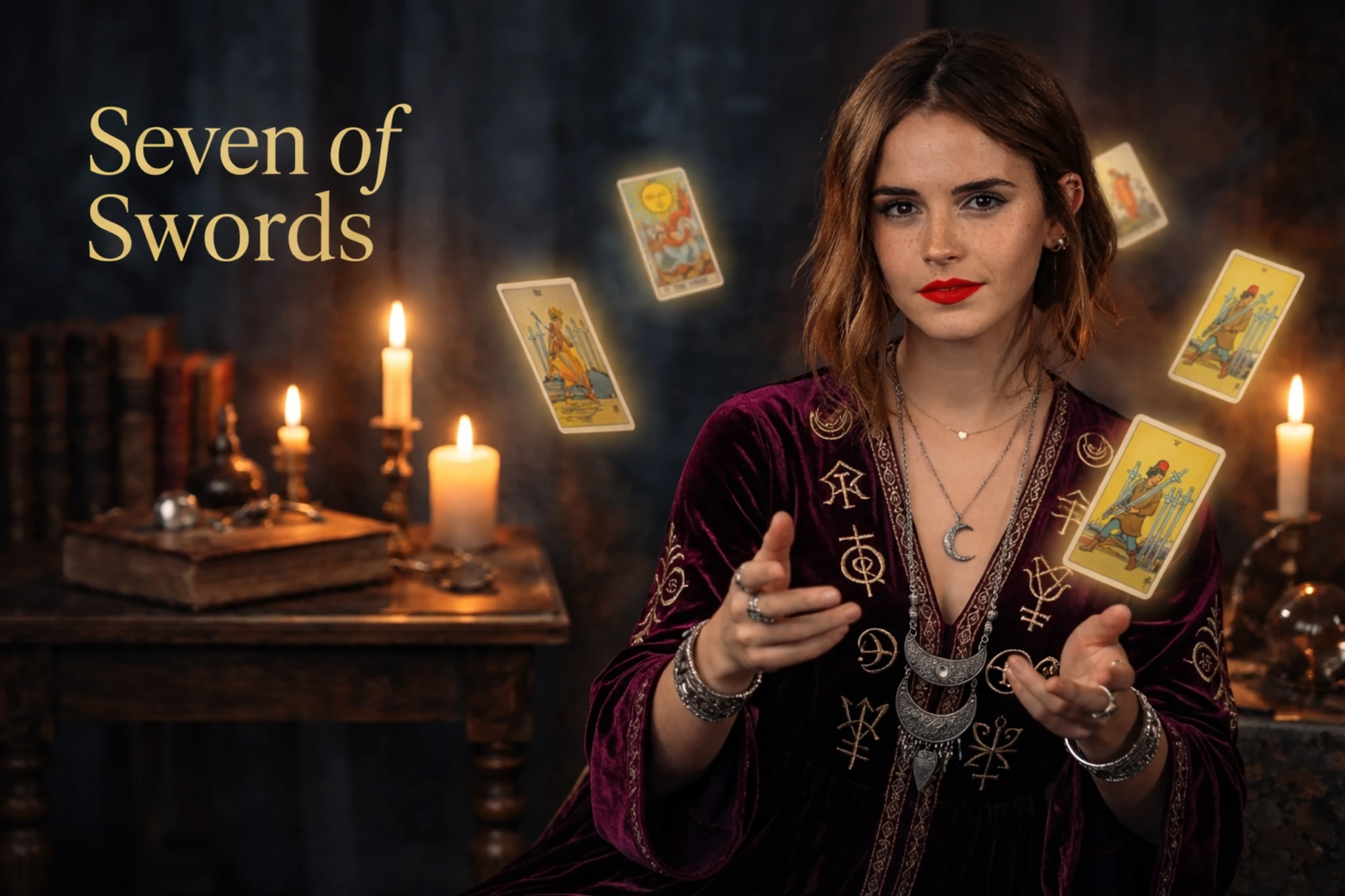
The journey into the world of self-discovery and intuition begins with a tangible object: the tarot cards. More than just pieces of cardboard, these 78 illustrated tools form a symbolic language that has guided seekers for centuries.
The act of selecting, understanding, and connecting with a deck of tarot cards is a deeply personal and transformative process.
This comprehensive guide serves as an essential resource for anyone looking to navigate the vast landscape of tarot cards, from choosing their first deck to mastering the profound symbolism embedded within each image.
The Anatomy and Structure of Tarot Cards
Every standard deck of tarot cards adheres to a specific, time-honored structure, which is fundamental to the practice of tarot reading. Understanding this anatomy is the first step in establishing a meaningful relationship with your tarot cards.
A complete deck of tarot cards contains 78 individual cards, divided into two primary groups: the Major Arcana and the Minor Arcana.
The Major Arcana: The Universal Story
The Major Arcana consists of 22 numbered tarot cards, from 0 (The Fool) to 21 (The World). These cards represent the major life lessons, spiritual themes, and archetypal forces that influence our existence.
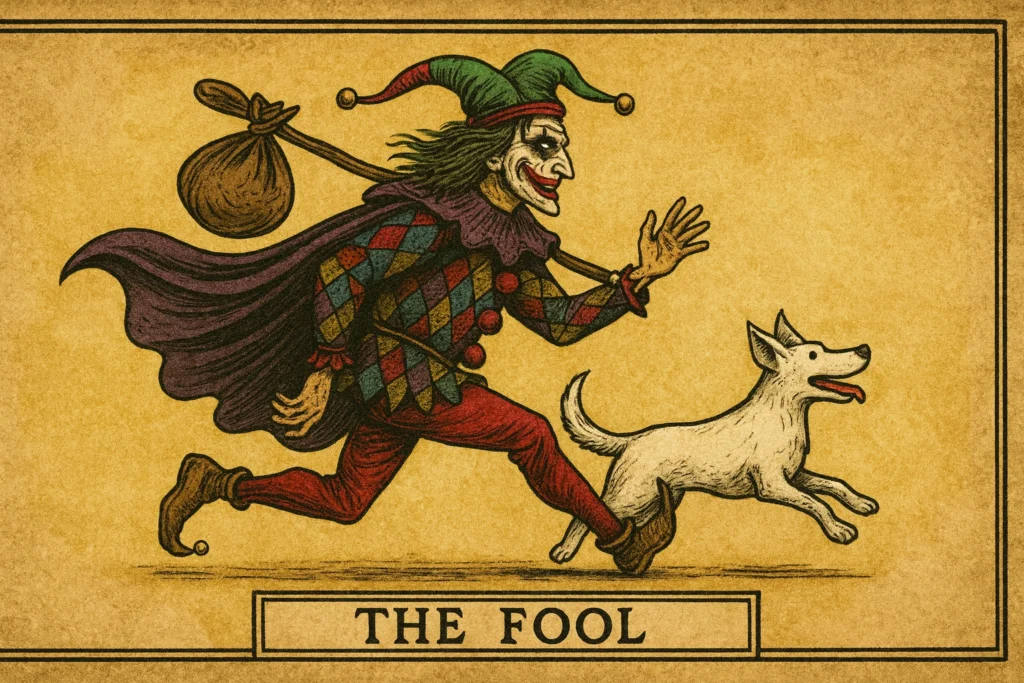
They speak to the grand narrative of life, often referred to as the “Fool’s Journey,” which charts the soul’s path toward enlightenment.
When these tarot cards appear in a reading, they signal significant, life-altering events or deep-seated psychological shifts.
The Minor Arcana: The Details of Daily Life
The Minor Arcana comprises 56 tarot cards, which detail the everyday experiences, emotions, and practical challenges we face. These tarot cards are divided into four suits, mirroring the structure of a traditional playing card deck, but imbued with deeper symbolic meaning.
| Suit | Element | Domain | Focus in Tarot Cards |
|---|---|---|---|
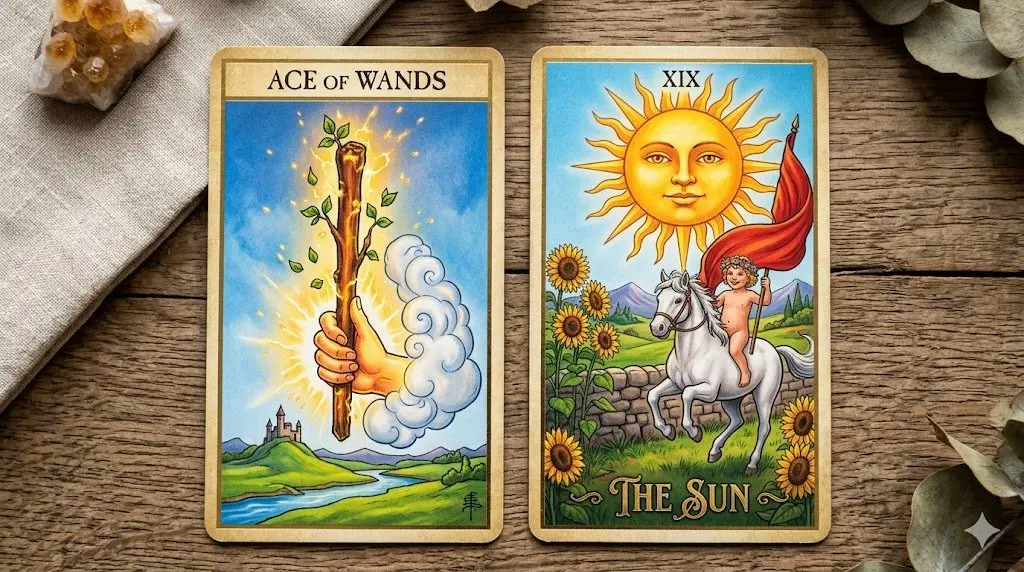
| Wands | Fire | Creativity, Will, Action | Career, Inspiration, Energy, Ambition |
| Cups | Water | Emotions, Relationships | Love, Intuition, Feelings, Intimacy |
| Swords | Air | Intellect, Conflict | Logic, Communication, Challenges, Truth |
| Pentacles | Earth | Material World, Security | Finances, Work, Stability, Manifestation |
Each suit contains ten numbered tarot cards (Ace through Ten) and four Court Cards (Page, Knight, Queen, King), which often represent personality types, roles, or ways of interacting with the world.
The combination of the Major and Minor Arcana ensures that a set of tarot cards can address any question, from the most profound spiritual inquiry to the most mundane daily concern.
Choosing Your First Set of Tarot Cards
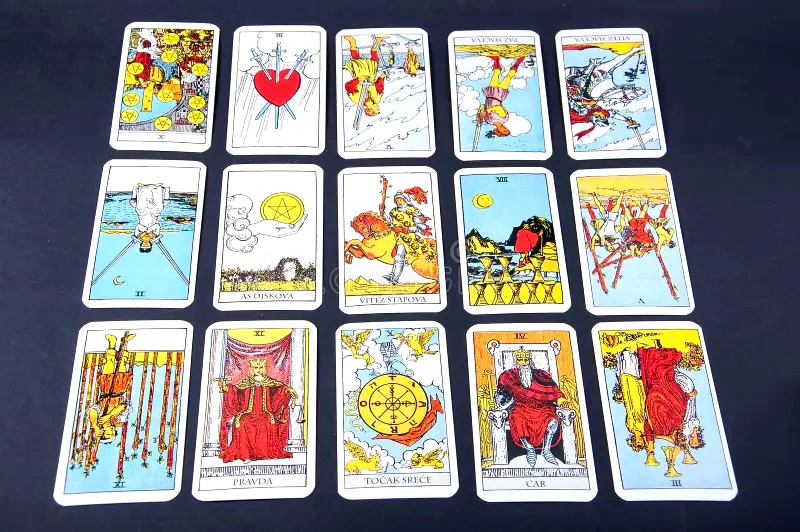
The market for tarot cards is vast and diverse, making the selection process both exciting and potentially overwhelming.
Choosing the right deck is crucial, as the imagery must resonate with your intuition to facilitate effective tarot reading.
The Importance of the Rider-Waite-Smith System
For beginners, the most recommended starting point is a deck based on the Rider-Waite-Smith (RWS) system. This system, illustrated by Pamela Colman Smith in 1909, is the foundation for nearly all modern tarot cards.
Its key feature is that the Minor Arcana cards are fully illustrated with scenes, rather than just geometric arrangements of the suit symbols (as seen in the older Tarot de Marseille).
This pictorial representation makes the RWS tarot cards far easier to interpret intuitively, as the scenes tell a story that the reader can immediately connect with.
While there are countless RWS-inspired decks, starting with a deck that clearly follows this structure provides a solid foundation before exploring more abstract or specialized tarot cards.
Criteria for Selecting Your Tarot Cards Deck
When selecting a deck of tarot cards, several factors should guide your choice, moving beyond the common myth that a deck must be gifted to you. A deck chosen by the querent is often the most powerful because the connection is immediate and personal.
1.Artistic Resonance: The most critical factor is the artwork. Do the images on the tarot cards speak to you? Do the colors and style evoke an emotional response? If the art is confusing or unappealing, it will hinder your intuitive connection during a tarot reading.
2.Theme and Tone: Modern tarot cards come in every theme imaginable—from cats and dragons to historical figures and pop culture. While a fun theme can be engaging, ensure the core symbolism of the tarot cards remains clear.
3.Card Stock and Size: Consider the physical quality. Will you be shuffling these tarot cards daily? Look for durable card stock. Also, ensure the size is comfortable for your hands, especially if you plan on performing frequent tarot reading sessions.
4.Inclusivity and Representation: Many modern decks of tarot cards offer diverse representation, which can make the archetypes feel more relatable and accessible.
The Evolution of Tarot Cards Art and Symbolism
The visual language of tarot cards has undergone a radical evolution over the centuries, reflecting changes in art, culture, and esoteric thought.
From Marseille to Modern Decks
The earliest surviving tarot cards, such as the Visconti-Sforza deck (mid-15th century), were hand-painted luxury items. The Tarot de Marseille, which became popular in the 17th century, standardized the imagery of the Major Arcana but kept the Minor Arcana relatively simple, relying on pips (suit symbols) rather than scenes.
The RWS deck revolutionized tarot cards by fully illustrating all 78 cards, cementing the symbolic meanings we use today. Following the RWS tradition, contemporary artists continue to reinterpret the archetypes, creating a vibrant ecosystem of tarot cards that cater to every aesthetic and spiritual path. This constant reinterpretation ensures that tarot cards remain a living, evolving system.
The Language of Color in Tarot Cards
Color is a powerful, often overlooked, element in the symbolism of tarot cards. Artists use color to convey immediate emotional and elemental meaning, which can significantly enhance a tarot reading.
| Color | Symbolic Meaning | Associated Suit/Element |
|---|---|---|
| Red | Passion, Energy, Action, Life Force | Wands (Fire) |
| Blue | Intuition, Clarity, Emotion, Spirituality | Cups (Water) |
| Yellow/Gold | Intellect, Consciousness, Joy, Success | Swords (Air) |
| Green | Growth, Abundance, Nature, Fertility | Pentacles (Earth) |
| White | Purity, Potential, Unconscious | All Arcana |
| Black | Mystery, The Unknown, Endings | Major Arcana (Death, The Devil) |
By paying attention to the dominant colors in the tarot cards drawn, the reader can quickly gauge the emotional temperature and elemental forces at play in the situation.
Distinguishing Tarot Cards from Oracle Cards
As the popularity of intuitive tools has grown, so has the variety of decks available. It is important to understand the fundamental difference between tarot cards and oracle cards, as they serve distinct purposes in a reading.
Tarot cards are defined by their fixed structure: 78 cards, 22 Major Arcana, 56 Minor Arcana (four suits). This fixed system provides a comprehensive framework that covers all aspects of the human experience, from the spiritual (Major) to the material (Minor).
The prescribed meanings of tarot cards are deeply interconnected, allowing for complex, narrative-driven tarot reading.
Oracle cards, conversely, have no fixed structure. They can have any number of cards, any theme, and any organization.
They are often used for quick, uplifting messages or specific guidance on a particular topic (e.g., angel messages, affirmation cards). While both are tools for intuition, tarot cards offer a more detailed, systematic, and archetypal analysis of a situation.
“While oracle cards offer a snapshot of inspiration, tarot cards provide a complete map of the territory, allowing for a deeper, more nuanced tarot reading.”
Connecting with Your Tarot Cards Deck
A deck of tarot cards is an extension of the reader’s intuition. To maximize its effectiveness in a tarot reading, it is essential to establish a personal connection with the deck.
Cleansing and Dedicating Your Tarot Cards
When you acquire new tarot cards, they carry the energy of the manufacturing process and the people who handled them. Cleansing the deck is a ritualistic act that purifies the cards and prepares them to be attuned to your energy.
Common Cleansing Methods:
•Knocking: Knocking sharply on the deck three times to “shake off” old energy.
•Smudging: Passing the tarot cards through the smoke of sage, palo santo, or incense.
•Moonlight: Placing the deck under the light of a full or new moon overnight.
•Sorting: Simply sorting the tarot cards back into numerical order, which re-establishes the deck’s inherent structure.
After cleansing, many readers dedicate their tarot cards by holding them and stating an intention for their use—for example, “I dedicate these tarot cards to truth, clarity, and the highest good.”
Bonding and Journaling with Your Tarot Cards
The most effective way to bond with a new deck of tarot cards is through consistent interaction.
1.The Interview Spread: Perform a special tarot reading where you ask the deck questions about itself: What is your strength? What is your weakness? What can you teach me?
2.Daily Draw: Commit to a daily tarot practice, drawing one card each morning and journaling about its meaning and how it manifests throughout the day. This practice sharpens your intuitive connection to the imagery of the tarot cards.
3.Carrying the Deck: Keep your tarot cards close to you, perhaps in a special cloth or box, to allow your personal energy to infuse the deck.
This process of bonding transforms the tarot cards from a generic tool into a personalized instrument of self-reflection.
The Role of Tarot Cards in Modern Self-Development
In the contemporary context, tarot cards are increasingly recognized not as a tool for fatalistic prediction, but as a sophisticated system for psychological projection and self-coaching.
The visual nature of tarot cards helps bypass the conscious, analytical mind, allowing the reader to access deeper truths.
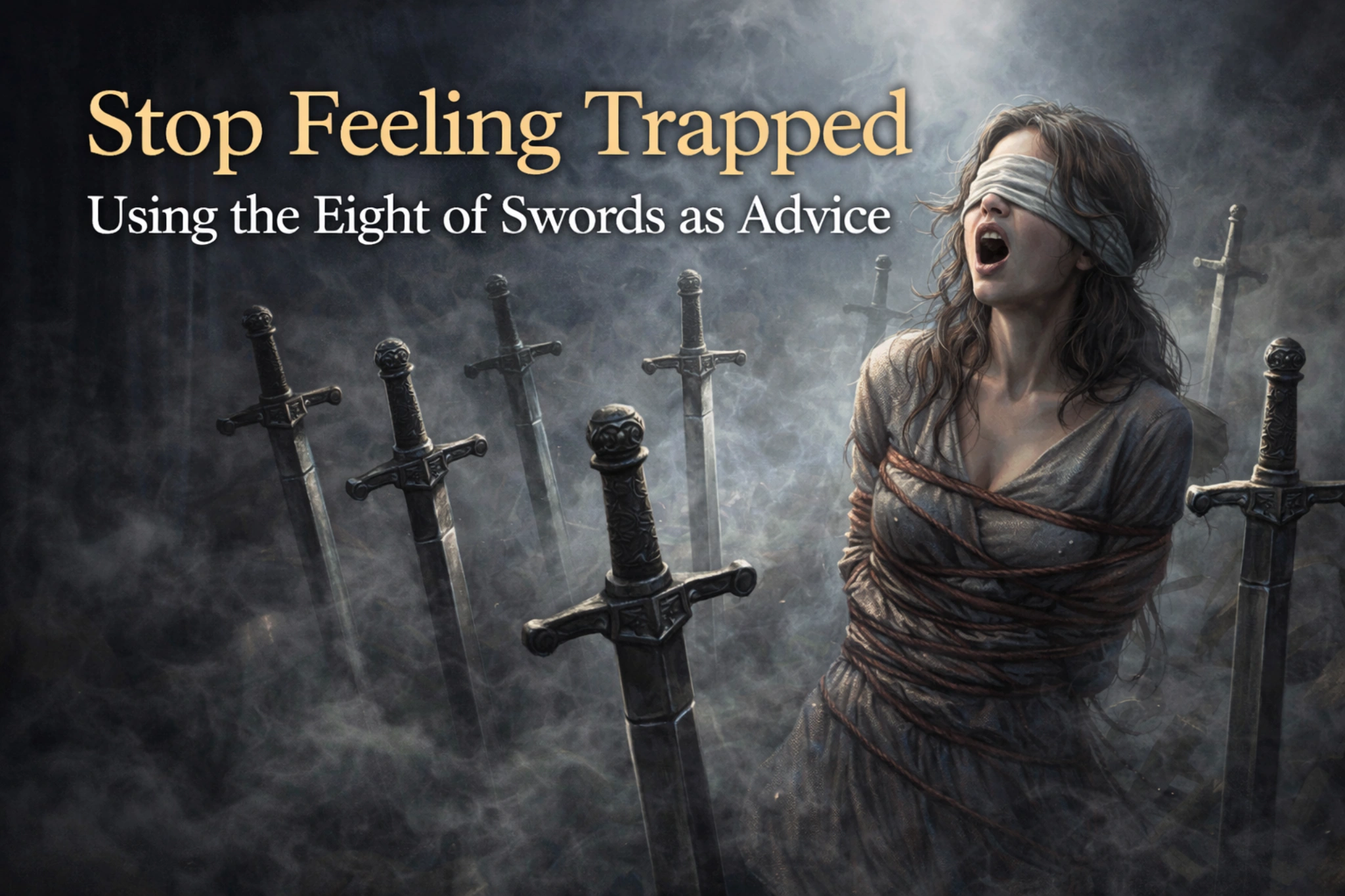
When a challenging card, such as the Five of Swords (defeat, loss), appears, the tarot cards are not predicting doom. Instead, they are prompting the reader to acknowledge a current reality, explore the source of conflict, and consider a more constructive path forward.
This focus on empowerment is why tarot cards have become popular in therapeutic settings and personal development coaching.
They provide a neutral, symbolic language to discuss difficult emotions and situations, offering a framework for understanding the internal landscape and making conscious choices for growth.
The continued popularity of tarot cards is a testament to their enduring power as a mirror to the soul.
The Enduring Magic of Tarot Cards
The journey with tarot cards is one of continuous learning and deepening intuition. From the moment a seeker chooses their first deck, they embark on a path of symbolic exploration that enriches their understanding of themselves and the world.
Whether you are drawn to the traditional wisdom of the RWS system or the vibrant artistry of a modern indie deck, the core purpose of the tarot cards remains the same: to illuminate the path to self-knowledge.
By respecting their structure, engaging with their symbolism, and establishing a personal connection, your tarot cards will serve as an invaluable companion, guiding you through the complexities of life with clarity, insight, and profound wisdom.