Something has shifted — and you’re not sure exactly when it started. The beliefs that once gave your life structure feel hollow.
The goals you spent years pursuing no longer seem worth the effort. Relationships that used to feel comfortable now feel misaligned.
You find yourself asking questions you’ve never asked before: What actually matters to me? Who am I becoming?
What kind of life would feel genuinely right?
This kind of internal reorganization is what many people call a spiritual awakening — and if you’re in the middle of one, you may have found your way to tarot for spiritual awakening as a way of making sense of what you’re experiencing. That instinct is a good one.
Not because tarot can explain the metaphysics of what’s happening, but because it offers exactly what this moment often needs: a symbolic mirror, a moment of structured reflection, and a language for changes that are real but difficult to articulate.
This guide explores seven tarot cards that appear most consistently during periods of genuine personal transformation, explains what they symbolize in the context of spiritual growth, and offers a complete spread and journaling practice to help you navigate this chapter with greater clarity and self-compassion.
Important: This article frames tarot as a tool for symbolic self-reflection and personal growth. It is not a medical framework, a supernatural confirmation, or a substitute for mental health care.
If the experiences you’re navigating are causing significant distress, affecting your daily functioning, or involving thoughts of harming yourself or others, please reach out to a licensed mental health professional. Spiritual exploration and professional support are not mutually exclusive — and seeking help is always the right choice when you need it.
What Does Spiritual Awakening Mean in Tarot?
Before working with specific cards, it helps to understand what ‘spiritual awakening’ means in the context of tarot — because the tarot’s version of this experience is considerably more grounded and psychologically precise than the term might suggest.
Awakening as a Process of Self-Awareness
In tarot, awakening is not primarily a mystical event. It is a process of becoming more aware — of your own patterns, your unconscious motivations, the stories you’ve been telling yourself about who you are and what you’re worth.
It’s the process of seeing yourself more honestly than you have before. That clarity is often uncomfortable precisely because it reveals where you’ve been operating from habit, fear, or others’ expectations rather than your own genuine values.
Tarot for spiritual awakening works because it gives this process of growing self-awareness a structure and a symbolic vocabulary. The cards don’t tell you what’s happening to you — they offer images and archetypes that your own deeper intelligence can respond to and make personally meaningful.
Why Transformation Can Feel Uncomfortable
One of the most reassuring things a tarot for spiritual awakening practice can offer is the confirmation that discomfort during transformation is not a sign that something is wrong. Cards like The Tower and Death appear repeatedly in awakening readings not because they are warnings of external disaster, but because they accurately describe the internal experience of significant change: the collapse of what was previously familiar, the release of what no longer serves, and the disorienting space that opens up before the next chapter has fully arrived.
Knowing that the discomfort has a name and a pattern — that it is, in fact, part of the process rather than evidence that the process is going wrong — is itself a form of support.
Tarot as a Mirror for Inner Change
The tarot’s Major Arcana was designed, over centuries of use, to map the full range of significant human inner experience. Its 22 cards describe the journey from The Fool’s innocent beginning through every major archetypal challenge and transformation to The World’s integration and completion.
This map aligns with spiritual awakening not by coincidence but because awakening is, at its core, a journey through exactly these archetypal territories.
When you use tarot for spiritual awakening, you’re essentially checking in with this map — noticing which archetypal territories you’re currently moving through and what that suggests about both the nature of your current experience and the direction your growth is taking.
Using Symbolism Without Treating It as Certainty
The most important principle in any tarot for spiritual awakening practice is to use the symbolic language as a reflective tool rather than a confirmation system. A card doesn’t prove what you’re experiencing is a spiritual awakening.
It doesn’t confirm that you’re on the right path or guarantee a specific outcome. What it does is give you a rich, specific symbolic image to sit with and respond to — and your response to that image, filtered through your honest self-knowledge and current experience, is where the genuine insight lives.
Tarot for Spiritual Awakening: 7 Cards to Watch For
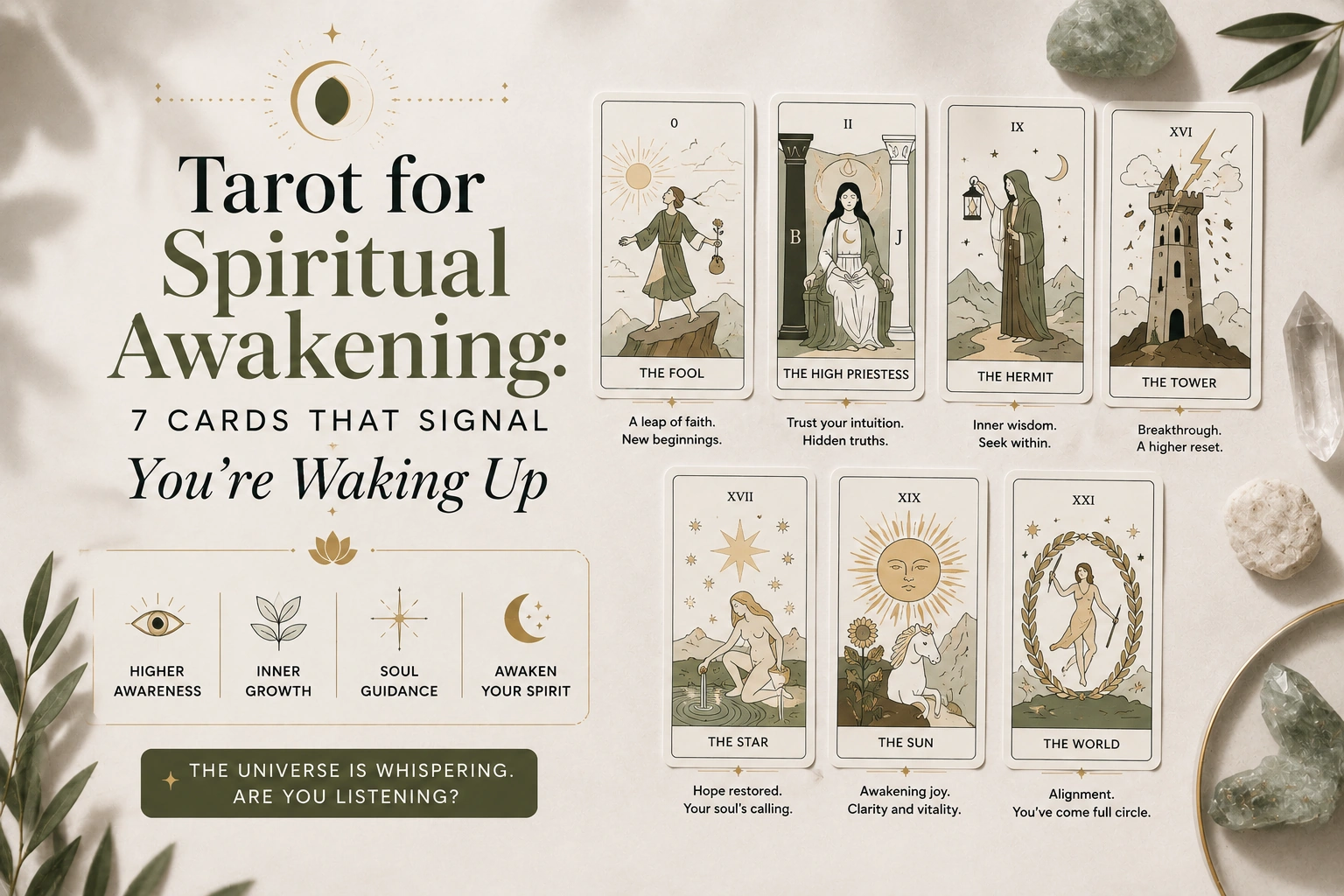
These seven cards appear most consistently in readings during periods of genuine personal transformation. Together they cover the full arc of awakening: the call, the disruption, the withdrawal, the healing, the release, the deeper listening, and the necessary pause.
1. Judgment — awakening, reflection, and answering a deeper call
Judgment is the tarot’s most direct symbol of spiritual awakening itself. The card depicts figures rising in response to a great, summoning call — the image of people being called to something more authentic, more fully alive, more genuinely themselves than they have previously allowed.
In a spiritual awakening reading, Judgment often appears when a person is being called to hear — and finally answer — something they have been sensing for a long time but haven’t yet committed to responding to.
What makes Judgment particularly significant in a tarot for spiritual awakening context is that its call is not to a specific external achievement. It is a call to honestly examine and realign with who you genuinely are and what you genuinely value.
That examination — the willingness to look at your life clearly and make genuine choices from what you see — is exactly what awakening most often requires.
Self-reflection prompt: What call have you been hearing that you haven’t yet answered? What would it mean to take it seriously?
2. The Tower — disruption, truth, and rebuilding
The Tower is one of the most striking cards in the deck — a structure struck by lightning, figures falling from the heights, everything that was built on an unstable foundation suddenly and dramatically revealing its instability. It’s also one of the most commonly misread cards in spiritual awakening readings, because its appearance feels like a warning when it is actually a description.
In the context of tarot for spiritual awakening, The Tower describes the experience of having previously stable structures — beliefs, relationships, identities, life arrangements — suddenly feel inadequate, hollow, or simply no longer true. The disruption is not punishment.
It is the universe insisting on what is actually real. Everything The Tower brings down was built on foundations that couldn’t hold the weight of who you’re becoming.
The invitation of The Tower is not to rebuild the same structure faster. It is to ask, in the clearing that disruption creates: what would I actually like to build next, now that I can see what the previous structure couldn’t support?
Self-reflection prompt: What structure in your life has recently revealed its instability? What would you build differently if you were starting from genuine values rather than old assumptions?
3. The Hermit — solitude, inner wisdom, and seeking meaning
The Hermit walks alone with a lantern, illuminating only the immediate path ahead — not the full journey, not the destination, just the next step. In a spiritual awakening reading, The Hermit appears when the most important work is happening inward and in solitude, rather than in social engagement or outward activity.
Many people who experience spiritual awakenings describe a simultaneous pull toward withdrawal — a reduced appetite for the social contexts and surface-level engagements that previously felt satisfying. The Hermit validates this pull as meaningful rather than pathological.
It names it as the necessary inward turn that precedes genuine wisdom rather than mere information.
The Hermit also carries a specific kind of hope: his lantern illuminates the path. The wisdom you seek during this period is genuinely available — it’s simply found inward, in stillness, in the honest examination of your own experience, rather than in external sources of validation or direction.
Self-reflection prompt: Where in your life are you being called inward? What do you discover when you create genuine solitude rather than filling every quiet moment?
4. The Star — healing, hope, and renewed faith
The Star appears in the Major Arcana sequence immediately after The Tower — after the disruption, after the collapse, after the clearing. A figure pours water freely beneath an open, star-filled sky.
Everything about the card speaks to genuine healing and the quiet, sustaining hope that persists through difficulty.
In a tarot for spiritual awakening reading, The Star is one of the most significant and comforting cards that can appear. It doesn’t promise that the difficult part is over — but it confirms that what is possible after difficulty is genuinely beautiful, and that the process of opening and healing is already underway even when it isn’t yet fully visible.
The Star is also associated with authenticity: the figure pours freely, openly, without guarding or withholding. An awakening reading that produces The Star is often pointing toward the specific work of learning to live and give from genuine openness rather than from the self-protection that previous wounds required.
Self-reflection prompt: Where is healing happening in your life right now, even if slowly? What would it mean to trust that process rather than forcing it to go faster?
5. Death — release, transformation, and rebirth
Death is the card people most commonly approach with anxiety — and the card that, in an awakening context, most consistently delivers the opposite of what that anxiety anticipates. The Death card is not about literal endings or disaster.
It is about the kind of transformation that only becomes possible when something genuinely runs its course and is allowed to release.
In tarot for spiritual awakening readings, Death appears when a significant chapter of your life — an identity, a relationship dynamic, a belief system, a way of relating to yourself — has genuinely completed its arc and is asking to be released rather than sustained through force of habit or fear. The card’s famous figure rides past everything that was, offering the horizon of what comes next only to those willing to let the present phase conclude.
The most important thing Death offers in an awakening context is this: what you’re releasing is not your self. It is the self-concept, the story, the habit, or the dynamic that served a previous chapter and no longer fits the person you’re becoming.
The release is not loss. It is the precondition for what the next chapter can offer.
Self-reflection prompt: What are you ready to release — not because it was wrong, but because it has genuinely run its course? What might become possible in its absence?
6. The High Priestess — intuition, stillness, and hidden knowledge
The High Priestess sits between two pillars — the known and the unknown — holding knowledge that she doesn’t yet reveal. She is the archetype of the wisdom that operates beneath conscious awareness, in the realm of intuition, dream, and the body’s quiet signals.
In a spiritual awakening reading, she appears when the most important information is already present but requires a quality of stillness and genuine inner listening to access.
Many people in the midst of awakening describe the experience of knowing something — about themselves, about a relationship, about the direction their life needs to take — before they can fully articulate or justify that knowing. The High Priestess validates this inner knowing as legitimate and trustworthy.
She doesn’t ask you to explain or defend what you sense. She asks you to trust it.
The High Priestess also speaks to the importance of not forcing clarity before it’s ready to arrive. Some dimensions of awakening unfold at the pace of genuine understanding rather than the pace of urgency.
Her message is to create the conditions — the stillness, the space, the honest attention — in which deeper knowing can surface in its own time.
Self-reflection prompt: What does your intuition already know about your current situation that your conscious mind hasn’t yet fully acknowledged? What would it mean to trust that signal?
7. The Hanged Man — surrender, pause, and a new perspective
The Hanged Man depicts a figure suspended upside-down from a tree — not in distress, but in a state of deliberate, chosen suspension. The expression on the figure’s face in most traditional decks is one of peace rather than suffering.
This is someone who has chosen to stop the forward movement of ordinary life and allow a fundamentally different perspective to emerge.
In a tarot for spiritual awakening reading, The Hanged Man appears when the most productive thing available is not action but genuine pause — the willingness to let the ordinary orientation of your life be suspended long enough that what has been invisible from the usual angle becomes clearly visible from the new one. Awakenings frequently involve this experience: the sudden, sometimes disorientating perception that what you thought was true about yourself, your relationships, or your life looks completely different from a different angle of seeing.
The Hanged Man’s invitation is not to force this new perspective but to allow it — to create enough space in your ordinary busy-ness for the different way of seeing to arrive. Sometimes the most important thing an awakening asks of you is simply to stop.
Self-reflection prompt: Where in your life would a deliberate pause reveal something important? What new perspective might become available if you stopped trying to move forward for a while?
Why These Tarot Cards Can Signal Spiritual Growth
They Reveal Changes in Identity
The 7 cards above share a common characteristic: they all speak to changes in the sense of self. Judgment calls you to align with a truer version of who you are.
The Tower reveals that your current identity has outgrown its previous structure. The Hermit asks you to find yourself in solitude.
Death marks the ending of an identity chapter. Together they describe the central task of spiritual awakening: the gradual release of constructed identity and the emergence of something more genuine.
They Invite Readers to Release Outdated Patterns
What makes these cards collectively powerful in a spiritual growth tarot context is that they all involve release. The Tower releases unstable structures.
Death releases completed chapters. The Hanged Man releases forward momentum.
The High Priestess releases the need to understand before you can trust. Every one of these cards is, at its root, an invitation to let something go — and to discover what becomes available in the letting go.
They Encourage Deeper Self-Trust
A consistent thread across all seven cards is the encouragement of genuine self-trust. The Hermit trusts his own lantern.
The High Priestess trusts her inner knowing. The Hanged Man trusts that the pause will produce something valuable.
In a society that consistently asks people to look outward for validation and direction, these cards collectively make a powerful counter-argument: the authority you’re looking for is already present in your own honest inner experience.
They Create Space for Reflection Before Action
One of the most practically useful things about working with these cards in a spiritual awakening context is that they all counsel reflection over reactive action. The Hermit withdraws.
The Hanged Man pauses. Judgment calls for honest reckoning before moving.
The Star heals before it rushes. This consistent counsel against premature action is exactly what awakening often requires — the willingness to understand what’s happening before deciding how to respond.
They Remind Readers That Growth Is Rarely Linear
The sequence of these seven cards in any particular reading is almost never orderly. Readers don’t move neatly from Judgment through The Tower to The Star in a satisfying straight line.
They experience multiple cards simultaneously, return to cards they thought they’d moved past, and encounter cards in orders that don’t follow any obvious logic. This is accurate.
Growth is not linear. Awakening is not a staircase.
It is more like a spiral — returning to familiar territories at greater depth, integrating previous insights into new contexts, moving forward and backward simultaneously.
Other Tarot Cards Connected to Spiritual Awakening
The Moon: Uncertainty, Dreams, and the Unconscious
The Moon speaks to the territory of spiritual awakening that is most difficult to navigate: genuine uncertainty, the blurring of what is real and what is projection, the movement between conscious and unconscious awareness. In an awakening reading, The Moon validates that disorientation and uncertainty are normal parts of the process — and invites trust in the deeper intelligence that operates below the level of rational certainty.
The Fool: Trust, Possibility, and New Paths
The Fool in an awakening reading names the specific quality of courage most needed at the beginning of any genuine new direction: the willingness to step forward without knowing exactly how the path will unfold. Awakening frequently deposits people at the beginning of something genuinely new — a new relationship with themselves, a new direction, a new understanding.
The Fool reminds them that beginnings inherently involve uncertainty and that this uncertainty is not a problem to be solved before the first step can be taken.
Temperance: Balance, Integration, and Patience
Temperance is the card of careful, patient integration — the alchemical blending of opposites into something more whole. In a spiritual awakening reading, it appears when the work is not the dramatic transformation of The Tower but the slower, quieter work of integrating what has been learned and allowing the changes already underway to stabilize before introducing more disruption.
The World: Completion, Wholeness, and Life Cycles
The World appears in awakening readings when a significant cycle of transformation is reaching its completion — when what was begun in confusion and disruption has developed into genuine understanding and integration. The World doesn’t signal the end of the journey but the completion of a specific chapter, and the readiness for whatever comes next.
Ace of Cups: Emotional Renewal and Openness
The Ace of Cups speaks to the emotional dimension of awakening: the opening of the heart that occurs when the defensive patterns of the past begin to release. In an awakening reading, this card often appears when significant emotional healing is underway or when the reader is becoming genuinely more available to themselves and to others.
Eight of Cups: Walking Away From What No Longer Fits
The Eight of Cups depicts someone walking away from a carefully arranged set of cups — leaving something organized and established in search of what is genuinely more fulfilling. In awakening readings, this card validates the impulse to leave behind contexts, relationships, or life structures that, however comfortable or familiar, no longer fit the person you’re becoming.
Six of Swords: Moving Toward Calmer Understanding
The Six of Swords shows a small group moving from turbulent to calmer waters — not dramatically, but steadily, with support. In awakening readings, this card often names the gradual movement from the acute disorientation of the beginning of a transformative period toward the more integrated understanding that develops over time.
Signs You May Be Experiencing a Spiritual Awakening
These signs are not diagnostic criteria — they are common descriptions offered by people who have described their experiences as spiritual awakenings. Not all of them apply to every person, and their presence doesn’t confirm or deny anything.
They are offered simply as recognition.
Questioning Old Beliefs or Priorities
What previously felt certain — about success, about the importance of specific relationships, about what makes a life meaningful — begins to feel less certain. Questions arise that didn’t arise before, and they resist easy answers.
Feeling Drawn to Solitude and Reflection
Social contexts that previously felt satisfying begin to feel draining or simply less interesting than time spent alone in genuine reflection. This is not depression — it is the inward turn that accompanies periods of significant personal change.
Noticing Emotional Patterns More Clearly
Patterns that previously operated below conscious awareness — the ways you protect yourself, the automatic responses that don’t actually serve you, the emotional dynamics that repeat across different relationships — become more visible. This visibility is both uncomfortable and genuinely useful.
Feeling Called to Create Healthier Boundaries
The sense that certain relationships, commitments, or patterns of self-neglect are costing more than they give grows more insistent. The desire to establish clearer, more honest limits — with others and with yourself — becomes more active.
Experiencing Meaningful Changes in Relationships
Some relationships deepen significantly while others feel increasingly misaligned. The common thread is that the relationships most aligned with who you’re becoming feel more important, while those that require you to remain who you were feel increasingly difficult to maintain.
Wanting a Life That Feels More Aligned
The gap between the life you’re living and the life that would feel genuinely true and meaningful becomes less easy to ignore. The desire for greater alignment between values and daily choices grows more insistent.
Learning to Tolerate Uncertainty With More Compassion
Paradoxically, periods of spiritual awakening often produce both more uncertainty and more capacity to tolerate it. As certainty about specific external outcomes decreases, the ability to be present with uncertainty without it generating overwhelming anxiety often gradually increases.
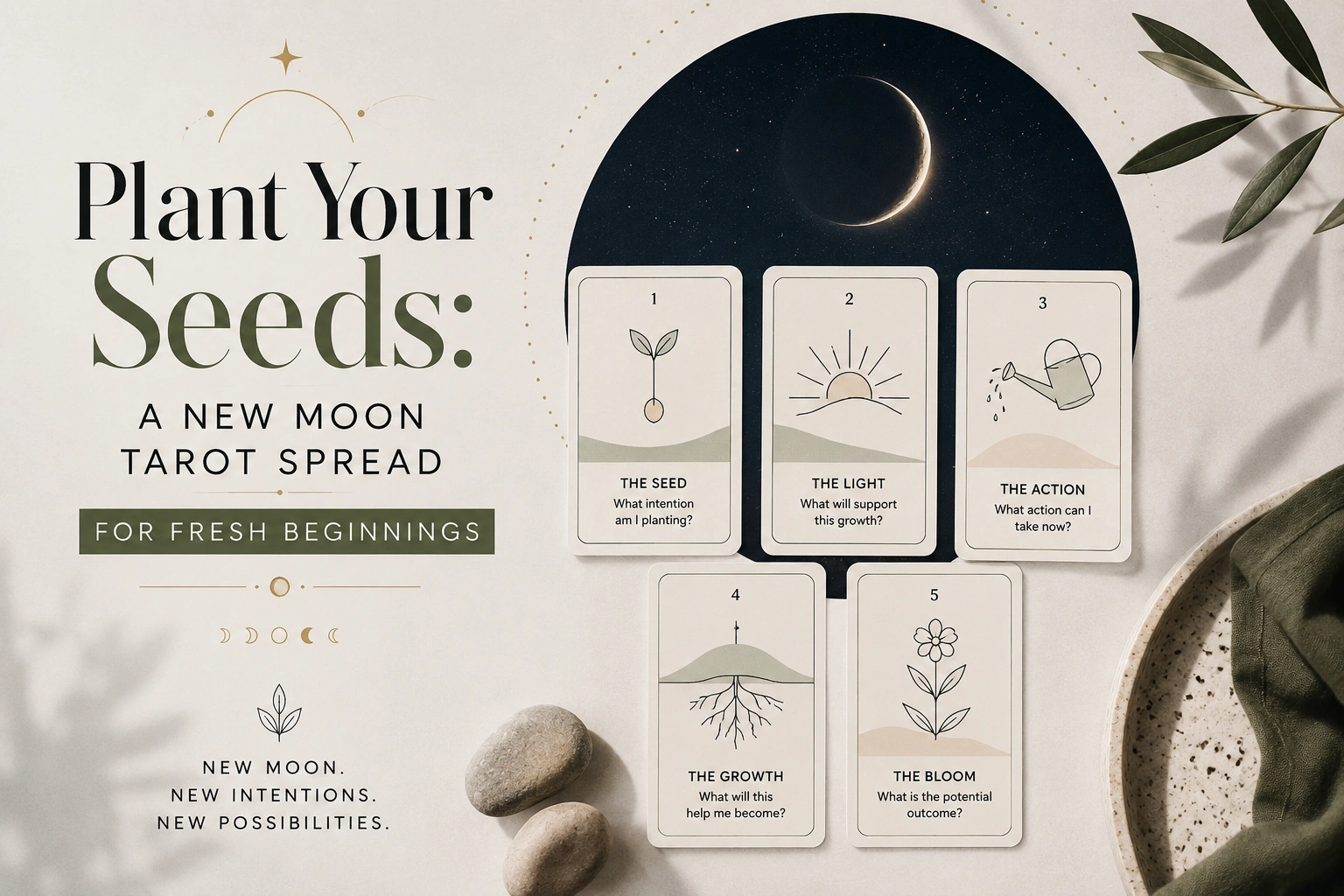
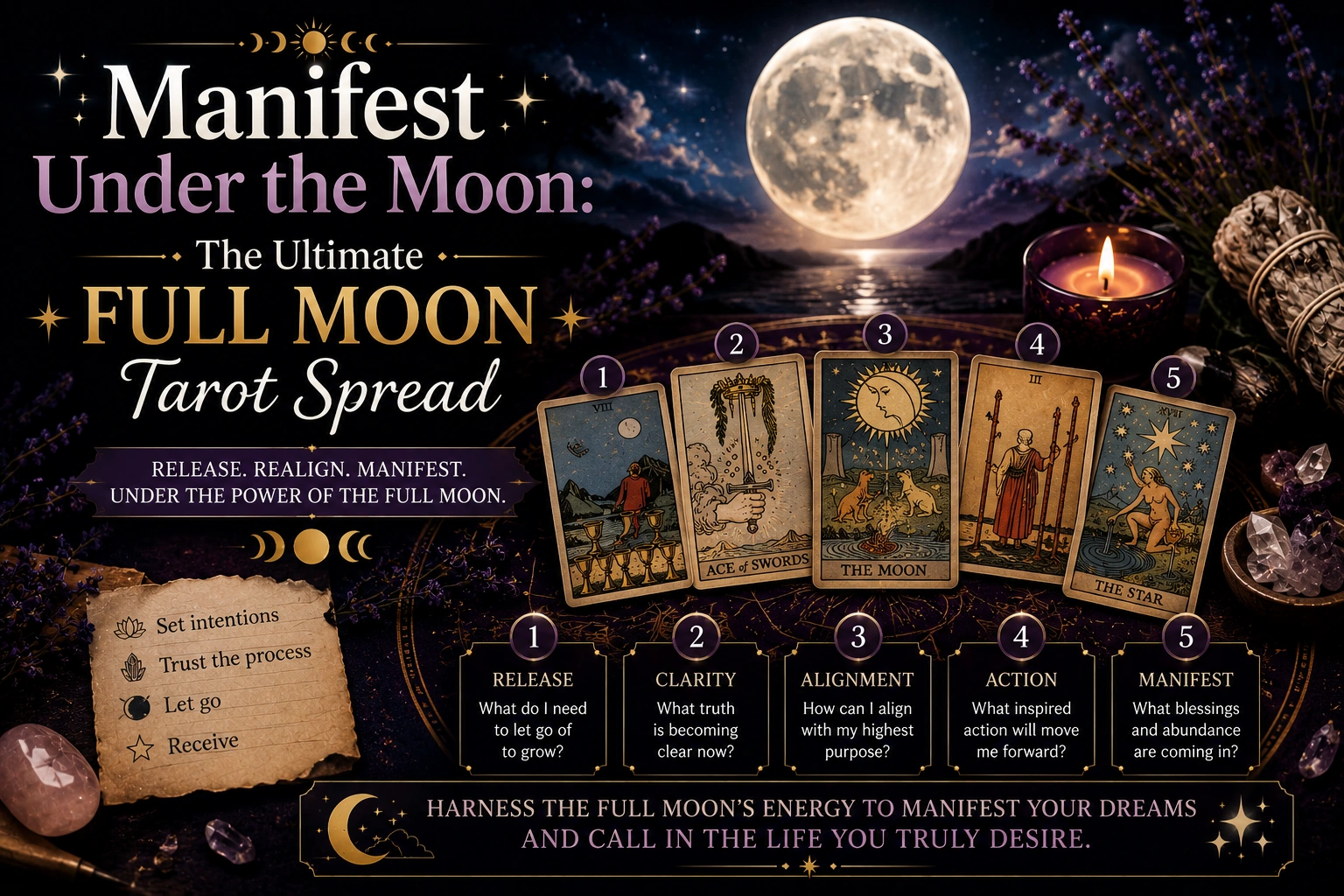
A 5-Card Tarot Spread for Spiritual Awakening
This spread is designed specifically for use during periods of personal transformation and awakening. Pull all five cards after grounding yourself with several slow breaths and setting a clear intention to receive honest insight rather than confirmation of any particular belief.
Card 1: What Part of Me Is Waking Up?
This card names the specific dimension of your experience — your sense of identity, your relationship with your emotions, your relationship to work or purpose, your spiritual orientation — that is most actively shifting right now. Read both the suit and the specific card: Cups points to emotional awakening; Swords to the awakening of perspective and thought; Wands to the awakening of passion and direction; Pentacles to the awakening of relationship to material life and values.
Card 2: What Truth Am I Ready to See?
The second card names something that has been present but perhaps not fully acknowledged — a truth about yourself, your relationships, or your life that is now ready to be seen clearly rather than half-glimpsed and quickly looked away from. Read this card with genuine courage.
The truth it names is ready to be acknowledged precisely because you are ready to hold it.
Card 3: What Pattern Am I Ready to Release?
The third card names a specific pattern — a habit, a way of protecting yourself, a story you’ve been telling about who you are or what you deserve — that has served its purpose and is now ready to be released. Naming the pattern clearly is the beginning of relating to it differently rather than being governed by it unconsciously.
Card 4: What Inner Strength Can Guide Me?
The fourth card names a genuine quality, capacity, or form of wisdom that is available to you right now and can serve as an anchor during the uncertainty of this transitional period. This card often names strengths that readers undervalue or have forgotten: the resilience that has carried them through previous difficulties, the compassion that has always been present, the clarity that comes from their particular way of seeing.
Card 5: What Is One Grounded Next Step?
The final card names the most practically actionable step available right now — not the entire journey, not the complete resolution of everything uncertain, but one specific, grounded, realistic thing that would honor the awakening and support the growth. Translate whatever appears into the most concrete, immediately executable action available.
This card is your bridge from insight to real life.
How to Use This Spiritual Awakening Tarot Spread
Step 1: Create a Calm and Supportive Space
Find a quiet place and a few undistracted minutes. This spread addresses material that is often emotionally significant — approaching it in a state of calm and deliberate attention produces significantly better results than pulling cards in a hurried or distracted state.
Step 2: Set an Intention for Insight, Not Prediction
Before shuffling, set the intention to receive honest, grounded insight about what you’re genuinely experiencing rather than confirmation of a specific belief or prediction of a specific outcome. The spread works in service of clarity and self-awareness.
Hold it to that purpose.
Step 3: Ask Open-Ended Questions
Frame your internal questions as open inquiries: ‘Show me what is most important for me to understand right now’ rather than ‘Tell me whether this is a spiritual awakening.’ Open questions produce more genuinely illuminating answers than questions seeking confirmation.
Step 4: Pull the Cards Slowly
Draw one card at a time, placing it in its position before drawing the next. Give each card a brief moment of genuine attention before moving on.
The first impression each card generates — before any analytical thought — is often the most personally resonant.
Step 5: Read the Cards as a Story
After all five cards are in place, step back and read the spread as a complete narrative rather than five isolated messages. What story are they collectively telling about where you are and where you’re heading?
The narrative often reveals things that individual card interpretation misses.
Step 6: Journal What Feels Meaningful
Write down what resonated most — not the most symbolically sophisticated interpretation, but what felt most honestly true about your current experience. The journaling step is where the reading becomes genuinely personal rather than symbolically interesting.
Step 7: Take One Practical Action Afterward
Before the reading fades, identify one specific, grounded, realistic action that honors what the spread showed you. Not a dramatic life change — one small, concrete next step.
The bridge between spiritual insight and real-world growth is almost always built from exactly these small, specific, consistently honored actions.
Best Tarot Questions for Spiritual Awakening
What Am I Being Invited to Understand About Myself?
This question invites the cards to surface the specific self-knowledge most available and most important in this moment — not what would be impressive to understand, but what is genuinely ready to become clear.
What Belief No Longer Supports My Growth?
A direct question for the specific story or assumption most actively limiting growth right now. The card names it with specific symbolic precision, making it easier to examine honestly rather than defend out of habit.
What Inner Strength Am I Ready to Trust?
A claiming question that names what is genuinely available — the capacity, the resilience, the wisdom — that the awakening is calling you to own more fully rather than defer to external sources.
What Am I Resisting Because It Feels Unfamiliar?
One of the most practically useful awakening questions because it names the specific dimension of growth that is being avoided not because it’s wrong but because it’s genuinely new and unfamiliar territory.
What Needs Healing Before I Move Forward?
This question names the healing work — internal, relational, or emotional — that is most active right now and most deserving of patient, compassionate attention rather than being bypassed in the rush toward what comes next.
What Would a More Aligned Choice Look Like?
A values-clarifying question that names the specific way a particular choice — in relationship, career, self-care, or direction — would become more aligned with who you’re genuinely becoming rather than who you’ve been.
What Can Help Me Stay Grounded During Change?
Perhaps the most practically important question during any awakening period — it names the specific practices, orientations, or supports most valuable for maintaining stability during a period of significant internal reorganization.
How to Read Difficult Tarot Cards During an Awakening
Difficult Cards Are Not Predictions of Disaster
The most important reframe in any spiritual awakening tarot reading: difficult cards are not threats. They are accurate descriptions of what is actually present in the current experience.
The Tower doesn’t predict disaster — it names that a significant disruption is already underway. Death doesn’t predict loss — it names that a chapter is completing.
Read difficult cards as honest witnesses, not catastrophic forecasts.
The Tower Can Reveal What Needs Rebuilding
When The Tower appears in an awakening reading, the most useful question is not ‘what is about to go wrong?’ but ‘what structure in my life has been built on an unstable foundation, and what would I build differently if I were starting from genuine values?’ The disruption the card describes is the opportunity, not the catastrophe.
Death Can Symbolize Release, Not Literal Loss
When Death appears in a spiritual awakening context, it is almost always describing a psychological or identity-level ending rather than any literal loss. Ask specifically: what is completing?
What identity, relationship pattern, belief, or chapter of my life has genuinely run its course and is asking to be released? The answer to that question is the reading’s most important message.
The Moon Can Invite Patience With Uncertainty
When The Moon appears during a period of awakening, it is most often naming the specific experience of genuine uncertainty — not knowing yet, not being able to see clearly yet, being in the in-between. Its invitation is not to force clarity but to move carefully and trust the deeper knowing that operates beneath ordinary conscious awareness.
The Hanged Man Can Suggest a Meaningful Pause
When The Hanged Man appears, it is almost always asking for a deliberate pause in the forward movement of ordinary life — not passivity or avoidance, but the specific kind of chosen suspension that allows a fundamentally different perspective to emerge. The pause is the practice.
Every Challenging Card Can Point Toward a Supportive Action
Whatever difficult card appears, ask: what action does this card point toward that would serve my growth? The Tower: what would I build differently from genuine values?
Death: what am I ready to consciously release? The Moon: what grounding practice would help me navigate uncertainty?
Every challenging card in an awakening reading contains an invitation toward something specifically useful.
Tarot Journaling Prompts for Spiritual Growth
What Feels Different About the Way I See My Life Now?
Write specifically about what has shifted in your perspective — not in the abstract but with concrete examples. What do you see now that you didn’t see before?
What do you understand now that felt completely different even six months ago?
What Truth Am I Avoiding?
Write about the specific honest assessment of your own situation, your own patterns, or your own values that you have been consistently looking away from. The truth you’re most reluctant to write down is almost always the most important one.
What Part of My Identity Is Changing?
Write about the self-concept, the story about who you are, or the role you’ve been playing that is becoming less comfortable, less true, or simply less yours. What part of how you’ve understood yourself is no longer fitting?
What Am I Ready to Release With Compassion?
Write about what you’re ready to let go — not with resentment or blame, but with genuine compassion for yourself and for the chapter that is completing. What deserves a kind farewell rather than either desperate clinging or relief-tinged dismissal?
What Helps Me Feel Grounded When Life Feels Uncertain?
Write specifically about the practices, relationships, routines, or orientations that most reliably return you to a sense of stability when the uncertainty of the awakening process becomes most acute. These are your practical anchors.
Name them, honor them, and use them.
Common Mistakes When Using Tarot for Spiritual Awakening
Treating Every Card as a Supernatural Sign
Tarot is a symbolic and psychological tool. It works through the rich vocabulary of archetypes and the honest engagement of self-reflection.
Treating every card as a supernatural message from a higher power or the universe bypasses the genuine intelligence that makes tarot useful and can create a relationship with the practice that is anxiety-producing rather than grounding.
Forcing a Dramatic Interpretation
Not every awakening is dramatic and not every reading will contain The Tower or Judgment. Some awakenings are quiet, gradual, and expressed through gentle Cups cards and thoughtful Pages rather than Major Arcana upheaval.
Force the reading toward dramatic interpretation and you’ll miss the actual message.
Using Tarot to Avoid Real-World Responsibilities
Spiritual awakening is sometimes used — consciously or not — as a reason to withdraw from practical responsibilities, relationships, and commitments. Tarot in this context can become a vehicle for avoidance rather than growth.
A reading that consistently points away from all practical engagement and toward more reading is usually telling you to take real-world action, not to consult more cards.
Pulling Cards Repeatedly for Certainty
Awakening involves genuine uncertainty. Pulling cards repeatedly in search of the certainty that uncertainty is making unavailable is not a spiritual practice — it is anxiety management dressed in tarot language.
The first honest card from a grounded state is almost always the most accurate. Trust it.
Ignoring Physical or Emotional Well-Being
Spiritual transformation is an embodied process. Neglecting sleep, nutrition, physical movement, and social connection in favor of more spiritual practice is counterproductive — it depletes the biological foundation that any sustainable growth requires.
Take care of your body. This is not separate from your awakening; it is part of it.
Isolating Instead of Seeking Support When Needed
The Hermit withdraws for the purpose of wisdom. Isolation in the service of avoidance, protection, or the belief that no one could understand is different, and it is not a spiritual practice.
If the process you’re navigating is significantly affecting your wellbeing, relationships, or daily functioning, please reach out — to trusted people, to a therapist, to a community. Seeking support is always the right choice when you need it.
Staying Grounded During Spiritual Change
Keep Routines That Support Your Well-Being
Spiritual awakening can produce the impulse to abandon ordinary structures in favor of the intensity and openness of the transformative experience. Resist this impulse.
Consistent routines — for sleep, for nourishment, for physical movement, for quiet time — are the practical foundation that makes any sustained spiritual growth possible rather than exhausting.
Talk to Trusted People
Awakening experiences can feel profoundly isolating precisely because they involve changes in perspective that feel genuinely difficult to share with people who haven’t had similar experiences. But isolation typically intensifies the difficulty of the process rather than supporting its integration.
Talk to people you trust — not necessarily about the metaphysics of what’s happening, but about how you’re feeling and what you’re navigating.
Spend Time in Nature or Move Your Body
The disorientation of awakening is partly the result of being very much in your head — in the thoughts, questions, and shifts of perspective that the process generates. Physical experience — being in nature, moving your body, experiencing sensory reality — is one of the most consistently effective practices for maintaining groundedness during periods of significant internal change.
Balance Reflection With Practical Action
Sustained periods of reflection without practical action can produce a kind of spiritual paralysis — the feeling of being in an endless process of understanding without any change in actual behavior or life circumstances. One concrete action taken from genuine insight is worth a month of insights not acted upon.
Balance the reflection with doing.
Seek Professional Support if Distress Affects Daily Life
If the experiences you’re navigating are causing significant anxiety, depression, disruption to relationships or work, or any thoughts of harming yourself or others, please reach out to a licensed mental health professional. Spiritual awakening and mental health challenges can coexist — and professional support is always appropriate and valuable when it’s needed.
Seeking help is not a failure of your spiritual practice. It is exactly the kind of self-care your awakening is asking you to cultivate.
Let Your Spiritual Practice Remain Flexible and Compassionate
The most sustainable spiritual practices are the ones that serve your wellbeing rather than demanding things of you that deplete it. If tarot for spiritual awakening is adding clarity, self-compassion, and groundedness to your life, it is serving its purpose well.
If it is generating anxiety, obsessive thinking, or isolation, take a break. The practice is a tool.
It serves you, not the other way around.
Final Thoughts on Tarot for Spiritual Awakening
Tarot for spiritual awakening is, at its best, a practice of honest seeing — a structured way of looking at what is actually present in your inner world and your life rather than what you think should be there or what would be most comfortable to find.
The seven cards explored in this guide — Judgment, The Tower, The Hermit, The Star, Death, The High Priestess, and The Hanged Man — are not predictions. They are mirrors.
When they appear during periods of personal transformation, they name what is already happening with a precision and symbolic richness that can make the experience feel less isolating and more navigable. They say: this has a name.
This has happened before. This is a part of the process, not evidence that the process is going wrong.
A spiritual awakening is not about becoming someone completely different. It is about seeing yourself more honestly — with greater clarity about your actual values, your genuine patterns, your authentic strengths, and the specific ways you have been living at a distance from who you actually are.
It is about releasing what you’ve outgrown with the compassion it deserves rather than the clinging of fear. And it is about choosing, one grounded step at a time, to move toward a life that feels more genuinely yours.
The cards can point you toward that clarity. The seeing is yours to do.
And you are more than capable of doing it.