
Some emotions don’t disappear when we ignore them. They wait. They surface quietly in the reactions we can’t quite explain, the patterns we keep repeating, the relationships that seem to echo something old and unfinished.
They live in the part of us that learned, early on, to stay small, to earn love, to hide certain feelings because the world didn’t always seem safe enough to hold them.
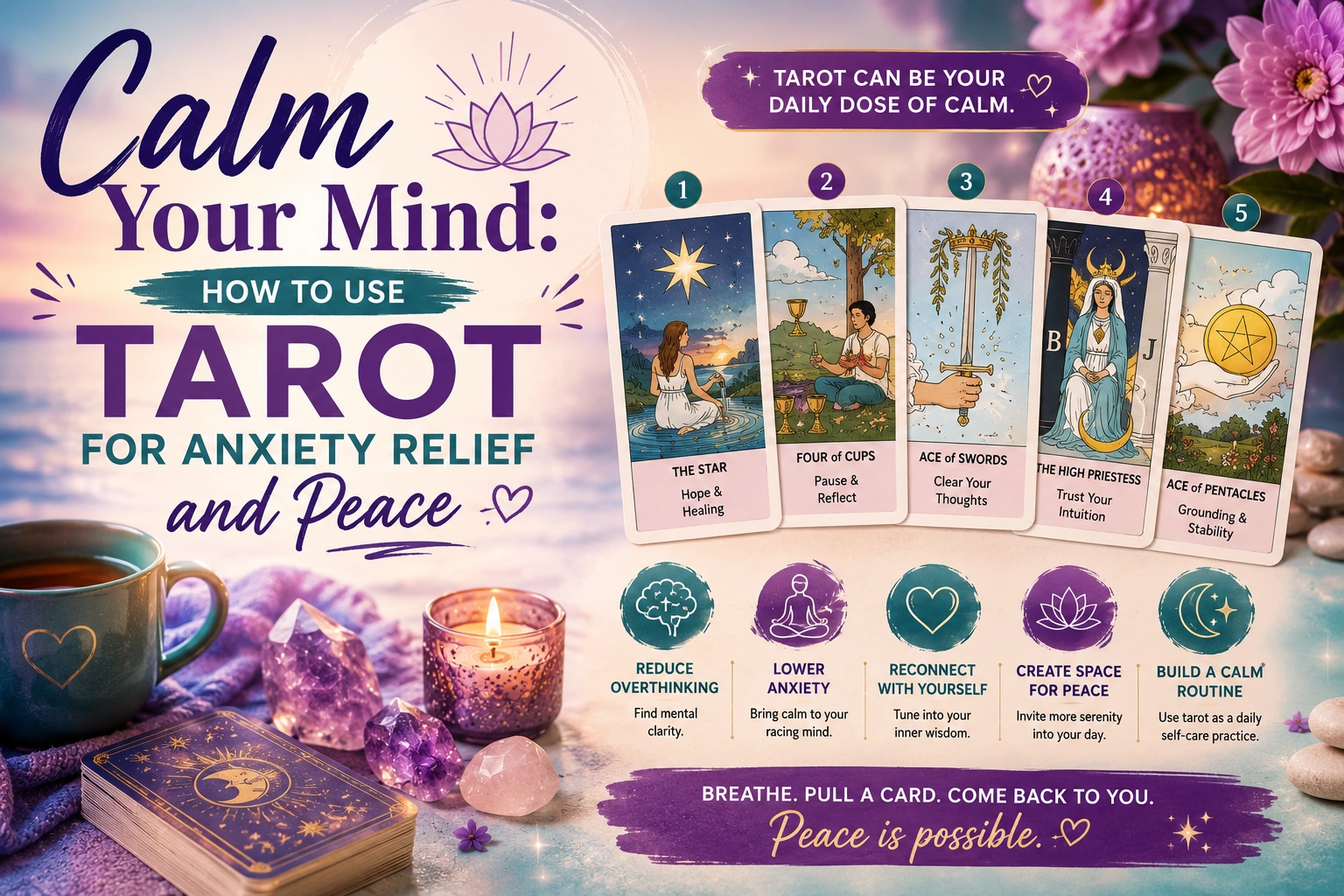
Shadow work tarot prompts offer a gentle, private way to start a conversation with those waiting parts of yourself.
Not to tear yourself open or force a breakthrough, but to simply turn toward what you’ve been turning away from — with curiosity, with compassion, and at your own pace.
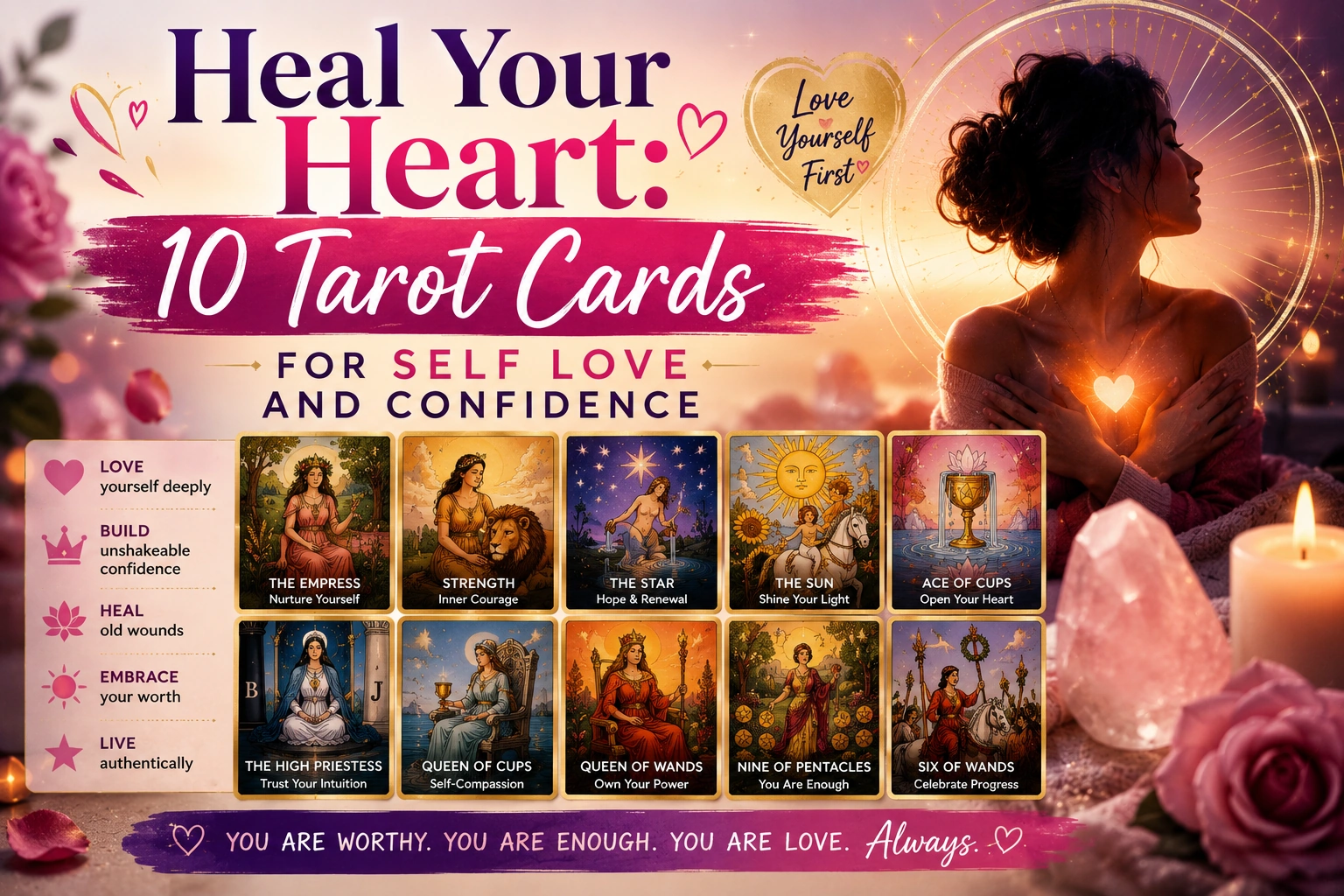
This guide gives you 21 carefully crafted shadow work tarot prompts designed to help you explore your inner child, recognize your emotional patterns, understand your self-protective instincts, and begin the quiet, meaningful work of healing from the inside out.
Alongside the prompts, you’ll find a full shadow work tarot spread, guidance on the best cards for this kind of work, and journaling examples to help you begin.
Important: Tarot is a powerful tool for self-reflection, emotional awareness, and personal growth. It is not a substitute for therapy, medical care, or professional mental health support. If shadow work brings up intense or overwhelming emotions, please reach out to a licensed therapist or counselor. You don’t have to do this work alone.
What Are Shadow Work Tarot Prompts?
Before diving into the prompts themselves, it helps to understand what shadow work actually is — and why tarot is such a natural companion for it.
The Meaning of Shadow Work in Tarot
“The shadow” is a concept developed by psychologist Carl Jung to describe the parts of ourselves we hide, deny, or disown — not only the dark or painful parts, but also qualities we were taught not to express, needs we learned to suppress, and emotions we decided weren’t safe to feel.
The shadow isn’t evil. It’s simply the part of us that didn’t get to come to the surface.
Shadow work tarot is the practice of using tarot cards as a reflective tool to illuminate those hidden parts. Each card in a tarot deck carries archetypal energy — The Moon evokes the unconscious and things hidden in the dark; The Tower represents the structures we cling to that ultimately need to fall; Six of Cups brings forward childhood memories and the emotional landscape of our earliest years.
When we bring these archetypes into dialogue with our own inner experience, they give shape and language to feelings that have been wordless.
How Tarot Helps Reveal Hidden Emotional Patterns
One of the most consistent things experienced tarot readers report is that the cards have an uncanny ability to name what is already true beneath the surface.
This isn’t magic in the supernatural sense — it’s the power of symbolic language to bypass the rational mind’s defenses and speak directly to what the body and the unconscious already know.
When you pull a card in response to a shadow work tarot prompt, you’re not asking the universe to tell you something you couldn’t know.
You’re giving your own deeper intelligence a specific image and story to work with. The card becomes a mirror, reflecting back what you’re ready to see.
Why Shadow Work Requires Compassion, Not Judgment
This is perhaps the most important principle in all of shadow work: the goal is not to confront, fix, or eliminate the parts of yourself you’ve been hiding.
The goal is to meet them with understanding. When the inner child shows up in a reading — wounded, defensive, still carrying a belief that formed when you were six years old — the healing response is not “you need to get over this.” It’s “of course you feel this way. You were doing the best you could.”
Every shadow work tarot prompt in this guide is written with this orientation. Gentle questioning. Honest reflection. No self-blame required.
Shadow Work Tarot Prompts for Inner Child Healing
The inner child is one of the central figures in shadow work — and one of the most emotionally significant aspects of tarot for personal growth.
Why the Inner Child Appears in Shadow Work
Many of our deepest emotional patterns were formed in childhood, when we were doing the very best we could to stay connected to the people we depended on for survival. We learned which feelings were acceptable and which weren’t.
We developed strategies for earning love, avoiding conflict, and staying safe. Those strategies made sense then. They often cause pain now.
Inner child tarot prompts bring these early experiences into conscious awareness — not to relive or re-traumatize, but to finally acknowledge them with the understanding and compassion that was perhaps not available when they first formed.
How Tarot Can Help You Listen to Younger Parts of Yourself
The Six of Cups is one of the most direct inner child cards in the deck — depicting two children in a garden, exchanging flowers in a moment of pure, uncomplicated tenderness.
When this card appears in a shadow work reading, it’s often an invitation to remember: what did you need as a child that you’re still reaching for now? What was offered freely then — or withheld?
Other cards carry inner child energy in more nuanced ways. The Page cards often represent the younger self in some form. The Moon shows the fears that formed in the dark.
The Empress speaks to the nurturing that was received or longed for. These cards, worked with intentionally through shadow work tarot prompts, become portals into the emotional history that still shapes your present.
The Difference Between Healing and Forcing Yourself to ‘Move On’
One of the most damaging ideas in popular self-help culture is that healing means getting over something, leaving it behind, or refusing to let the past have power.
Real healing looks different. It looks like going back to what was difficult and offering it the understanding it never received. It looks like allowing yourself to grieve what was lost. It looks like recognizing the patterns without continuing to act from them.
Shadow work tarot prompts don’t ask you to move on. They ask you to move toward — toward the parts of yourself that have been waiting, patiently and persistently, for your honest attention.
How to Use These Shadow Work Tarot Prompts Safely
Shadow work is meaningful precisely because it touches real things. That means it can also bring up emotions that feel big, unexpected, or difficult to hold. These guidelines will help you work with the prompts in a way that is genuinely safe and healing rather than overwhelming.
Create a Calm and Private Space
Shadow work deserves protected time and physical privacy. Find a space where you won’t be interrupted — even twenty minutes of undisturbed quiet is enough to begin.
Some people light a candle, burn incense, or arrange their cards in a way that feels intentional. These aren’t requirements. They’re signals to your nervous system that this is a different kind of attention than ordinary daily life.
Ground Yourself Before and After the Reading
Grounding is the practice of connecting your awareness to your body and the present moment before and after any emotionally exploratory work. Simple options: place your feet flat on the floor and feel the ground beneath you. Take five slow, deep breaths.
Hold something cold or textured in your hands. Name five things you can see in the room. These practices help regulate your nervous system and ensure that shadow work stays within a manageable emotional window.
Journal Slowly and Honestly
The tarot prompt is just the beginning. The real work happens in the journaling that follows. Write slowly. Write without editing or judging. Don’t write what you think you should feel — write what you actually feel, even if it surprises or embarrasses you. The page is private. The truth that surfaces there is for you alone.
Stop If the Reading Feels Overwhelming
If a card or prompt triggers an emotional response that feels too large to hold, stop. Close the cards. Breathe. Ground yourself with the techniques above. There is no urgency in shadow work. These parts of you have been waiting patiently for a long time — they can wait a little longer. Honoring your own limits is itself a form of inner child care.
Seek Support When Deep Emotions Come Up
If shadow work surfaces memories, emotions, or patterns that feel too heavy to process alone, please reach out to a licensed therapist or counselor. The prompts in this guide are designed to be gentle and self-directed, but there is no substitute for professional support when what emerges is genuinely difficult. Seeking help is not a failure of the process. It is the process working exactly as it should.
21 Shadow Work Tarot Prompts to Heal Your Inner Child Today
For each prompt, draw one card, sit with its imagery, and then write freely in response to the question. There are no right answers. There is only what is true for you right now.
Prompt 1: What part of my inner child needs attention right now?
This opening prompt establishes the central relationship of the work. The card you pull here is often both surprising and immediately recognizable — the part of you that surfaces has usually been present for a while, waiting for exactly this invitation. Look at the figure in the card if there is one: what do they need? What do they look like they’re feeling?
Prompt 2: What emotion have I been avoiding?
Avoidance is one of the shadow’s primary mechanisms. We get busy, distracted, productive — anything to stay out of the feeling that’s waiting underneath. This card names the emotion most in need of your attention. Challenging draws (Nine of Swords, Five of Cups, The Moon) are particularly valuable here: they’re pointing directly at what has the most charge.
Prompt 3: What belief about myself did I learn too early?
Many of our deepest limiting beliefs were formed before we had the cognitive capacity to question them. “I am too much.” “I am not enough.” “I don’t deserve good things.” “It’s not safe to be seen.” This prompt brings that early belief into consciousness. The Eight of Swords, The Devil, the Five of Pentacles, or reversed court cards often appear here with uncomfortable accuracy.
Prompt 4: What does my inner child wish I understood?
This is one of the most tender prompts in the set. Let the card speak as if it were your younger self sending you a message. What is the longing in it? What is the unmet need? The Six of Cups, the Page of Cups, the Ace of Cups, and the Star often carry messages of striking clarity and gentleness here.
Prompt 5: Where am I still seeking approval?
The need for approval is one of the most universal shadow patterns — rooted in the very reasonable childhood experience of needing others’ acceptance to feel safe and loved. This prompt asks you to look honestly at where that need is still running your adult choices. The Three of Pentacles reversed, The Hierophant, the Two of Cups in shadow positions, and Page energies often surface here.
Prompt 6: What pattern keeps repeating in my relationships?
Repeating patterns are the shadow’s clearest fingerprints. If the same dynamic shows up with different people across different contexts, the common factor is always something within yourself that the pattern is expressing or protecting. This prompt helps identify that pattern. The Wheel of Fortune reversed, The Moon, the Two of Pentacles, or suit-specific relationship cards often appear here with pointed relevance.
Prompt 7: What am I afraid to feel fully?
There’s a difference between emotions we’ve processed and emotions we’ve merely survived. This prompt asks about the feeling that is still too large or too risky to let yourself fully experience. Grief, rage, shame, longing, terror — these are the emotions most commonly buried in the shadow. The High Priestess, The Moon, Five of Cups, or the reversed Ace of Cups often appear here.
Prompt 8: What old wound is influencing my choices today?
Old wounds don’t stay in the past. They travel forward in our nervous systems, our interpretations, our automatic responses. This prompt asks for specific, honest clarity about which wound is most active right now — which old injury is behind current decisions, reactions, or avoidances.
Prompt 9: How do I protect myself when I feel unsafe?
Our protective strategies are the shadow’s most sophisticated structures. They were intelligent adaptations. They are often now limitations.
The Nine of Wands, The Hermit, Four of Cups, or reversed court cards often appear here, naming the protection with remarkable specificity. The question is not “why do I do this” with judgment, but “how do I do this, and what am I protecting underneath?”
Journaling seed: How old is this protection? What was it keeping me safe from when it first developed?
Prompt 10: What does my shadow self want me to acknowledge?
This is the direct shadow conversation prompt. The card here represents the disowned part of yourself asking for recognition — not approval, not permission, just acknowledgment that it exists and that it has something real to say. The Devil, The Tower, The Moon, and reversed Major Arcana cards frequently carry the most significant messages in this position.
Prompt 11: Where am I abandoning myself?
Self-abandonment happens when we consistently override our own needs, instincts, or feelings to maintain connection, avoid conflict, or meet others’ expectations. It is one of the most painful shadow patterns because it often happens automatically, below the threshold of conscious choice. The Eight of Cups, the Five of Pentacles, or cups and pentacles cards in challenging positions often appear here.
Prompt 12: What part of me needs forgiveness?
Shadow work and self-forgiveness are inseparable. We cannot heal what we are still punishing. This prompt invites you to look at the part of yourself — the behavior, the choice, the quality, the feeling — that you’ve been holding against yourself the longest. The Judgement card in shadow work contexts often carries enormous weight here. So does The Tower.
Prompt 13: What truth am I finally ready to accept?
This prompt marks a turning point in the set — it begins to move from excavation toward integration. The card here names something you have known for a while but have been resisting fully admitting. Truths about a relationship, a direction, a part of yourself, a pattern. The High Priestess, the Ace of Swords, The World, and Judgement often carry the clearest messages in this position.
Prompt 14: What limiting belief am I ready to release?
Readiness matters in shadow work. Some beliefs need more time before they can be genuinely released. This prompt specifically asks about the one that is ready — the one that has been identified, understood, and is finally beginning to loosen its grip. The Eight of Swords reversed, the Death card, or the Ace of Swords often appear here with liberating energy.
Prompt 15: How can I give my inner child safety today?
This is a directly reparative prompt — one of the most practically healing in the entire set. The card here doesn’t describe a wound. It describes an action. What can you do, today, specifically and concretely, to give yourself the safety your inner child still needs? The Empress, The Star, the Ten of Pentacles, or the Six of Cups often carry extraordinarily tender guidance here.
Prompt 16: What does self-love look like for me right now?
Self-love is not a fixed destination or a feeling you either have or don’t have. It is a practice — and it looks different at different moments and in different seasons of a person’s life. This prompt asks for specificity. Not a generic affirmation, but an actual, real, particular action or orientation that would be a genuine expression of love toward yourself right now.
Prompt 17: What boundary would help me heal?
Boundaries are one of the most direct expressions of inner child care. They communicate: I value myself enough to protect my space, my energy, and my wellbeing. This prompt asks which boundary — with a specific person, situation, or even with yourself — would create the conditions most needed for healing right now.
Prompt 18: What hidden strength came from my past?
Shadow work is sometimes assumed to be only about wounds — but the shadow holds gifts, too. Qualities we developed in response to difficulty. Resilience, empathy, creativity, resourcefulness, the capacity to hold others’ pain without flinching. This prompt asks for the strength that your particular history gave you. Strength cards (The Strength card itself, Wands court cards, The Emperor, The Star) often appear here with affirming power.
Prompt 19: What does my heart need more of?
After the excavation work of earlier prompts, this one turns toward longing and genuine need. Not what the mind thinks should be enough, or what seems reasonable to want — but what the heart, honestly, is reaching for. Cups cards are particularly resonant in this position, especially the Ace of Cups, the Two of Cups, and the Ten of Cups.
Prompt 20: What lesson is my shadow trying to teach me?
This reframing prompt invites you to see the shadow not as the enemy of your growth but as its most demanding teacher. Every repeating pattern, every triggered reaction, every defended wound is trying to show you something about where freedom is still being withheld from yourself. What is the curriculum?
Prompt 21: What is the next loving step in my healing journey?
The final prompt closes the circle gently and practically. It doesn’t ask you to solve everything or heal completely. It asks for one step — the next small, honest, loving movement forward. Whatever card appears here is a message from your own deeper wisdom about where your energy and attention belong as you move out of the reading and back into your life.
Best Tarot Cards for Shadow Work and Inner Child Healing
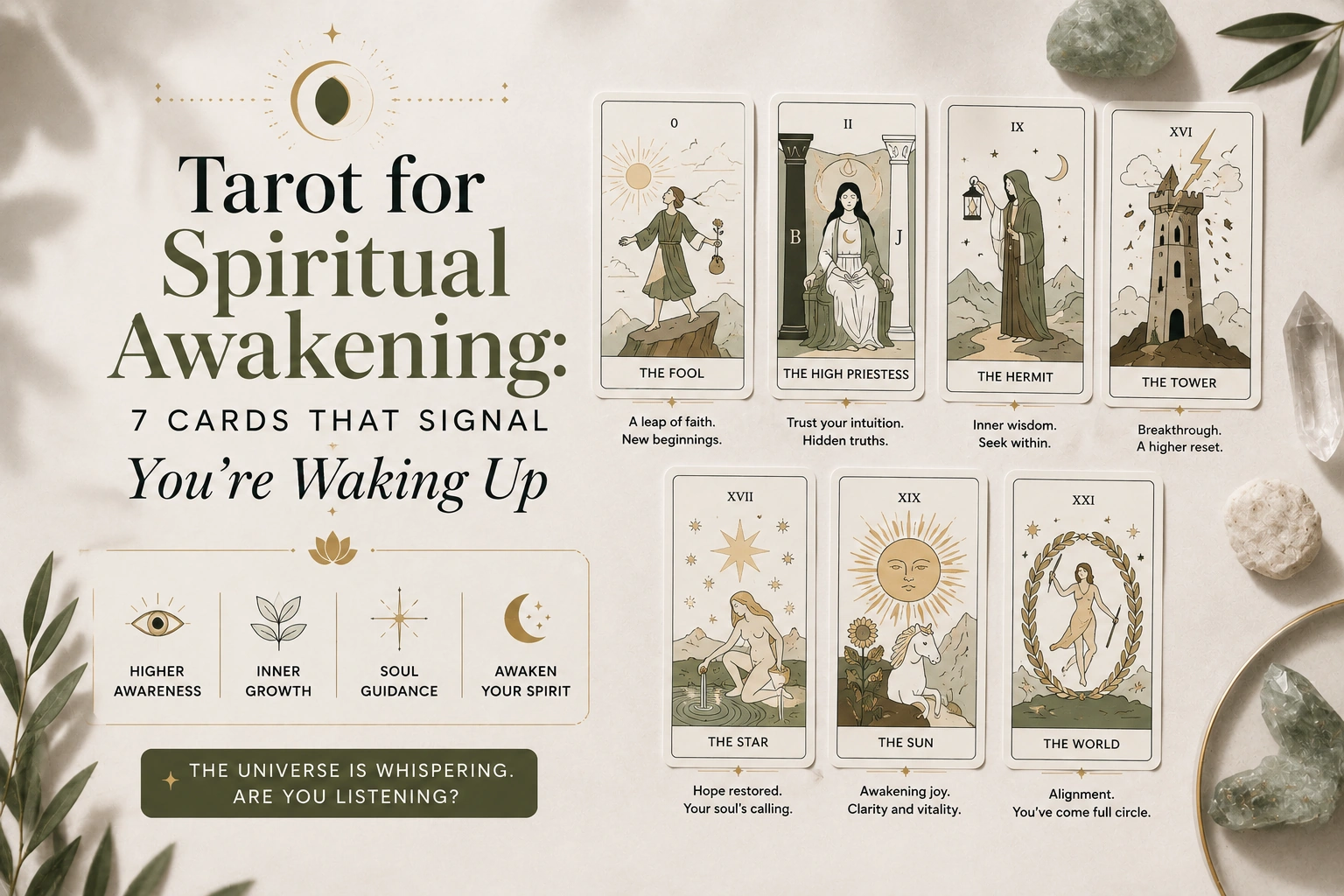
While any card in the tarot can appear meaningfully in shadow work, these seven carry particular resonance for this kind of deep inner work.
The Moon: Subconscious Fears and Hidden Emotions
The Moon is the quintessential shadow card — depicting a luminous, reflected light that illuminates without fully clarifying, a path that leads into unknown territory, and creatures that emerge from the depths.
In shadow work, The Moon represents the unconscious landscape itself: the fears, the dreams, the things that are real but hard to see clearly.
When The Moon appears, the invitation is to move toward the murky water rather than away from it, trusting that what lives there is not as threatening as fear suggests.
The Hermit: Solitude, Reflection, and Inner Wisdom
The Hermit holds a lantern that illuminates only the next step — not the entire path, not the destination, just what’s immediately ahead. In shadow work, this is both comfort and instruction. You don’t need to see the whole journey. You need to see clearly enough to take the next step.
The Hermit also represents the kind of sacred solitude that shadow work requires: the willingness to go inward, away from the noise of ordinary life, and sit with what you find.
Strength: Compassion for the Wounded Self
The Strength card depicts a figure gently, tenderly placing their hands on a lion — not subduing it through force but taming it through love.
This is the essence of shadow work: the wounded, defensive, reactive parts of ourselves are not overcome through willpower or self-discipline.
They are integrated through compassion. When Strength appears in a shadow work tarot reading, it is almost always asking: can you approach this with softness rather than force?
Six of Cups: Childhood Memories and Emotional Roots
Of all the cards in the Minor Arcana, the Six of Cups carries the most direct energy of the inner child. Childhood, memory, innocence, and the emotional roots of adult patterns — all are present in this card’s imagery.
When Six of Cups appears in shadow work tarot prompts, it is almost always pointing directly to early experiences that are still shaping current emotional life.
The invitation is to revisit these not with adult judgment but with the compassion of someone who finally understands what that child was going through.
Five of Cups: Grief, Regret, and Emotional Release
The Five of Cups depicts a figure looking down at three spilled cups, not yet seeing the two that remain upright behind them. In shadow work, this card speaks directly to grief and regret that has not been fully honored — loss that has been minimized, mourning that was cut short, emotional wounds that were never fully acknowledged.
When this card appears, it is an invitation to grieve honestly. Not to wallow, but to truly honor what was lost before trying to move forward.
Eight of Swords: Limiting Beliefs and Mental Patterns
The Eight of Swords shows a bound, blindfolded figure surrounded by swords — confined not by any truly insurmountable obstacle but by fear, limiting belief, and the conviction of being trapped.
In shadow work, this is one of the most significant cards for recognizing the mental structures we’ve built around our wounds. The blindfold is our own. The binding is our own.
The swords are the beliefs we’ve accepted without questioning. And — importantly — the path is not blocked. The figure could walk out. This card asks: what belief is keeping you inside the boundary?
The Star: Hope, Renewal, and Spiritual Healing
The Star appears after The Tower in the Major Arcana sequence — after disruption and collapse, there is this: open sky, still water, a figure pouring freely between the unconscious and the earth. In shadow work, The Star is the card of genuine healing beginning to take hold. It doesn’t promise that everything is resolved.
It promises that something true and nourishing is available, that renewal is possible, and that the work you’re doing is leading somewhere worth going.
Shadow Work Tarot Spread for Deep Healing
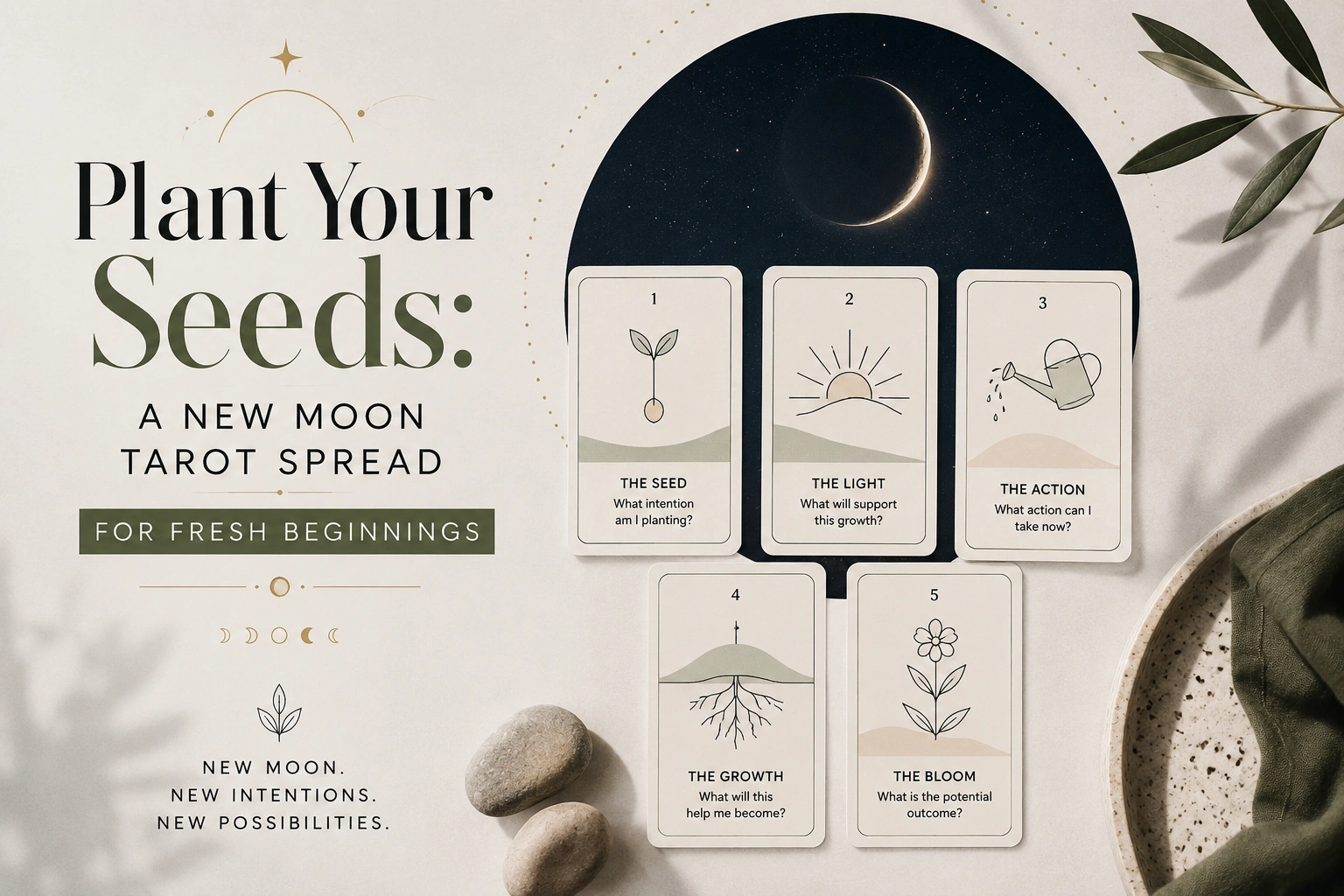
Use this 7-card shadow work tarot spread for a comprehensive, structured exploration of a specific pattern, wound, or area of inner child healing. Pull all seven cards at once and read them in order, then step back and read the spread as a complete story.
Card 1: What Shadow Pattern Is Active Right Now?
This card names the specific pattern, behavior, or emotional dynamic that is most alive in your current experience. It may be something you’ve been aware of, or something that arrives as a surprise. Either response is valid information.
Card 2: Where Did This Pattern Begin?
This card points toward the origin — the early experience, relationship, or wound from which the current pattern emerged. It won’t always be literal, but it will always be directionally true. The Six of Cups, Page energies, and childhood-associated Major Arcana cards often appear with particular resonance here.
Card 3: How Does This Pattern Protect Me?
Every shadow pattern has a protective function — something it was designed to keep you safe from. This card reveals that function with compassion, not judgment. Understanding why a pattern exists is the foundation for relating to it differently.
Card 4: How Does This Pattern Limit Me?
This card shows the cost — how the protection that once served you is now constricting your growth, relationships, choices, or wellbeing. The Eight of Swords, The Devil, Four of Pentacles reversed, and Swords cards in shadow positions frequently appear here with uncomfortable clarity.
Card 5: What Does My Inner Child Need?
The center of the spread — and often the most emotionally significant card in the reading. This is the direct message from the younger part of you who first developed this pattern. What did they need then that they are still asking for now?
Card 6: What Healing Action Can I Take?
This card moves the reading from awareness to agency. It names a specific, practical, real thing you can do — internally or externally — to begin addressing the pattern and giving the inner child what they need. The more specific and actionable your interpretation of this card, the more useful the reading becomes.
Card 7: What Strength Is Emerging From This Work?
The final card closes the spread with a message about the gift that shadow work gives back. What quality, capacity, or form of freedom is becoming available to you through your willingness to look honestly at these patterns? The Star, Strength, The World, and suit Aces often carry the most affirming and energizing messages in this position.
Shadow Work Tarot Journaling Examples
These examples show how the shadow work tarot prompts might unfold in practice, using specific card draws and brief journaling responses.
Example 1: Healing Fear of Rejection
Prompt: “What emotion have I been avoiding?” — Card drawn: Three of Swords. The three of swords depicts a heart pierced by three swords — the imagery of grief, betrayal, and heartbreak. A reader sitting with this card might write:
“I’ve been afraid of heartbreak for so long that I’ve been choosing not to fully connect with anyone. The rejection I’m avoiding isn’t just possible future rejection — it’s the grief I never finished from a long time ago. Maybe what I’m really avoiding is that old pain.”
This is tarot for emotional healing at its most direct: not a new revelation, but an old truth finally given a name and an image.
Example 2: Understanding People-Pleasing Patterns
Prompt: “Where am I still seeking approval?” — Card drawn: The Hierophant reversed. In shadow work, the reversed Hierophant often speaks to the internalized authority figures whose approval we’ve been seeking at the expense of our own authentic voice.
The journaling response might look like: “I realized I’ve been performing competence for years to prove myself to my father — who isn’t even in my life anymore. But the judge is internal now. I don’t need permission. I’m giving it to myself.”
Example 3: Releasing Shame With Compassion
Prompt: “What part of me needs forgiveness?” — Card drawn: The Moon. The Moon in this position speaks to the parts of ourselves we’ve hidden because they felt shameful or too strange to be accepted. A reader might write: “I’ve been ashamed of how needy I feel sometimes. Like needing comfort is weakness.
But looking at The Moon — all these creatures coming out of the water, all this hidden life — I think what I need is to stop being ashamed of needing. That’s not weakness. That’s being human.”
Example 4: Reconnecting With Emotional Needs
Prompt: “What does my heart need more of?” — Card drawn: Ace of Cups. The Ace of Cups is the tarot’s image of pure emotional availability — an overflowing cup, an open heart, the beginning of genuine feeling. A reader might write: “My heart needs more connection.
Not just presence — real connection, where I actually say what I’m feeling instead of curating how I come across. I’ve been so afraid of burdening people that I’ve stopped letting anyone actually know me.”
Example 5: Turning Pain Into Self-Awareness
Prompt: “What lesson is my shadow trying to teach me?” — Card drawn: The Tower. The Tower is the card of collapse and revelation — the sudden dismantling of what was built on an unstable foundation. In shadow work, this card as a lesson often carries a message about the structures we’ve built to avoid feeling something. The journaling response:
“My shadow has been trying to show me that the wall I built after that loss is now the thing making me feel isolated. The protection became the prison. The lesson is that I built it — and I can choose to start taking it down.”
Questions to Ask After a Shadow Work Tarot Reading
After completing any shadow work tarot session, these reflection questions help consolidate what surfaced and point toward integration.
What Did This Reading Reveal About My Emotional Patterns?
Look back at all the cards you drew and identify the thread that connects them. Is there a recurring suit, a dominant energy, a theme that appears across multiple positions? The pattern across the reading often names the central shadow work territory more precisely than any individual card.
What Part of Myself Needs More Compassion?
Shadow work without compassion becomes self-attack dressed up in spiritual language. After every reading, identify the specific part of yourself that most needs your gentleness — and offer it something concrete: a kind internal word, a recognition, a willingness to let it exist without judgment.
What Am I Ready to Stop Carrying?
Some of what we carry belongs to us — lessons to be learned, wounds to be healed. Some of it was placed on us by others and was never ours to carry in the first place. This question helps distinguish between the two, and opens the possibility of setting down what has become dead weight.
What Practical Action Can I Take Today?
Shadow work that stays entirely in the realm of insight without translating into changed behavior or concrete action has limited transformative power. After every reading, identify one specific, small, real thing you can do — a conversation you’ll have, a boundary you’ll set, a need you’ll acknowledge, a kindness you’ll offer yourself — that brings what you learned into your actual life.
How Can I Support Myself After This Reflection?
Shadow work is emotionally intensive work. After any meaningful session, practice active self-care: drink water, eat something grounding, move your body, speak to someone safe, spend time in nature, or simply rest. Treat post-reading self-care with the same seriousness as the reading itself.
The Shadow Side of Shadow Work Tarot
Even the most healing practices have shadow sides. Here’s what to watch for in your own shadow work tarot practice.
Using Tarot to Overanalyze Painful Emotions
Intellectual analysis of emotional pain can become its own form of avoidance. If you find yourself doing very sophisticated thinking about your wounds without actually feeling them, the cards have become a way of staying in the head and out of the body. Shadow work ultimately requires embodied experience — the willingness to feel, not just to understand.
Forcing Healing Before You Feel Ready
There is no shame in not being ready to look at certain things yet. The psyche has its own timing, and that timing deserves respect. If a prompt or card consistently feels too large, it may be asking you to build more support, more stability, more safety before entering that territory. Listen to that.
Mistaking Emotional Intensity for Progress
Feeling a lot during shadow work doesn’t necessarily mean you’re healing. Catharsis without integration — the release of emotion without a corresponding shift in understanding or behavior — often leaves people feeling raw but unchanged.
The measure of progress is not how much you felt. It’s whether anything has shifted in how you understand yourself or move through the world.
Ignoring the Need for Real-Life Support
Tarot is a powerful tool. It is not a therapist. There are territories — particularly around significant trauma, abuse, grief, or mental health symptoms — that genuinely require professional support. If your shadow work is surfacing experiences that feel beyond self-directed exploration, please reach out to a licensed mental health professional. That is not giving up on the work. It is taking it seriously.
Becoming Attached to Pain Instead of Transformation
Shadow work can become its own kind of identity if we’re not careful — a way of staying in our wounds rather than moving through them.
The goal of any shadow work tarot practice is not to become more sophisticated about your pain. It is to become freer. If the work is consistently deepening suffering rather than illuminating it, it may be time to pause, seek support, and examine whether the practice is serving growth.
How to Turn Shadow Work Tarot Prompts Into Healing
Prompts create awareness. Healing requires integration. Here’s how to carry what the cards show you into genuine transformation.
Write Without Judging Yourself
The single most important practice in shadow work journaling is non-judgmental writing. Whatever comes up — anger, shame, grief, confusion, the revelation of a pattern you’ve been proud of denying — let it be on the page without immediately editing, justifying, or explaining it away. The truth that arrives uncensored is the truth that can actually be worked with.
Look for Recurring Emotional Themes
Over time, your shadow work tarot prompts will begin to reveal recurring themes: the same fears surfacing across different questions, the same relational pattern named by different cards, the same inner child wound appearing in different forms.
These repetitions are the most important information the practice gives you — they point directly at the core material most in need of your attention.
Pair Tarot With Grounding Rituals
Shadow work is more sustainable and more healing when it is paired with physical grounding practices. After a reading, take a walk, prepare food mindfully, do gentle stretching, spend time in nature, or engage in any activity that brings you back into your body and the present moment. The insights of shadow work need to be embodied, not just thought, to create lasting change.
Practice Inner Child Reassurance
After any shadow work session that surfaces inner child material, take a few moments to consciously reassure the younger part of yourself that surfaced.
This can be done through journaling (writing directly to your inner child), through visualization (imagining yourself sitting with and holding that younger version of yourself), or simply through saying aloud: “I see you. You’re safe now. I’m not going anywhere.” It may feel strange. It is also profoundly healing.
Take One Small Healing Action After Each Reading
The bridge between shadow work insight and actual change is consistently small, concrete action. After every tarot session, identify one thing — just one — that you will do differently, more compassionately, or more honestly before the next reading.
Not a transformation. Not a resolution. Just one step, chosen with awareness and taken with intention.
Final Thoughts on Shadow Work Tarot Prompts
The 21 shadow work tarot prompts in this guide are invitations, not demands. They ask nothing of you that you aren’t ready to offer. And they offer in return something genuinely rare: the experience of being met — of meeting yourself — with honesty rather than performance, with curiosity rather than judgment, and with the patient, steady recognition that every part of you has value, even the parts you’ve been most afraid to look at.
Shadow work tarot, at its best, is not about confronting your darkness or destroying your defenses. It is about learning to sit in a room with everything you are — the wounded parts, the protected parts, the angry parts, the parts that still carry the longing of a much younger person — and say: I see you. I’m not afraid of you. Tell me what you need.
The inner child asks nothing more than that. Just to be seen. Just to be held with something warmer than silence. The tarot cards, in their strange and ancient way, hold space for exactly that seeing. These prompts are simply the door.
Healing doesn’t mean rejecting or transcending the darker parts of yourself. It means learning to meet them with the one thing they’ve always needed most: the honest, tender, courageous presence of someone who is finally willing to stay.
FAQ: Shadow Work Tarot Prompts
Q1: What are shadow work tarot prompts?
Shadow work tarot prompts are questions designed to be explored through tarot card draws, helping you access hidden emotional patterns, inner child wounds, subconscious beliefs, and parts of yourself that haven’t been consciously acknowledged.
Rather than asking about the future or external events, these prompts turn the tarot inward — using the cards as a reflective mirror for deep self-exploration, emotional awareness, and healing.
Q2: How do you use tarot for shadow work?
Choose a shadow work tarot prompt that resonates with where you are in your healing journey. Shuffle your deck while holding the question in mind, then pull one card.
Sit with the card’s imagery and symbolism before writing freely in a journal about what the card brings up in response to the prompt. Don’t edit or censor your writing — let honesty lead. After journaling, ground yourself and identify one small, concrete action you can take based on what surfaced.
Q3: Can tarot help with inner child healing?
Yes — tarot is a particularly effective tool for inner child healing because it works through imagery and symbol rather than pure logical analysis, which helps bypass the rational mind’s defenses and access the emotional, intuitive, and somatic information that inner child work requires.
Cards like the Six of Cups, the Page cards, The Moon, and Strength frequently carry direct inner child messages. The key is approaching the work with gentleness, patience, and a willingness to feel rather than only think.
Q4: What tarot cards are best for shadow work?
The cards most consistently associated with shadow work and inner child healing include:
The Moon (subconscious fears and hidden emotional patterns), The Hermit (inner reflection and solitude), Strength (compassion for wounded parts of the self), the Six of Cups (childhood memories and emotional roots), the Five of Cups (grief and emotional release), the Eight of Swords (limiting beliefs and mental patterns), and The Star (hope and genuine healing beginning to take hold).
Any card can carry shadow work meaning in context — these simply appear most frequently in deep inner work readings.
Q5: Is shadow work tarot safe for beginners?
Shadow work tarot can be safely practiced by beginners with appropriate preparation and self-awareness. The most important safeguards are: grounding before and after readings, journaling slowly without self-judgment, stopping if emotions feel overwhelming, and seeking professional support when deep or difficult material surfaces.
The prompts in this guide are specifically designed to be gentle and emotionally accessible — they are invitations to explore, not demands to confront. If you are currently working with a therapist, shadow work tarot can be a valuable complement to that professional support.