In the vast lexicon of the Tarot, where each card represents a universal archetype or life situation, some figures are more unsettling than others.
The Nine of Swords as a person embodies one of the most challenging yet profoundly human energies: that of the overthinker, the worrier, the individual trapped in a self-made prison of anxiety and fear.
This is not a card of external threats, but of internal torment—a mental landscape where thoughts become swords, and the quiet of the night is shattered by the cacophony of what-ifs and regrets.
This robust article will provide a didactic, professional, and spiritual exploration of the Nine of Swords as a person.
We will dissect the anatomy of this anxious archetype, examining its psychological underpinnings, its manifestation in relationships and career, and its deeper spiritual meaning as a catalyst for profound transformation.
By understanding the energy of the overthinker, we can learn to approach it—whether in ourselves or others—with compassion, and discover the hidden pathways from mental anguish to profound clarity.
The Anatomy of the Archetype: Deconstructing the Nine of Swords
To understand the Nine of Swords as a person, we must first analyze the rich and haunting symbolism of the card itself, particularly in the Rider-Waite-Smith tradition, which serves as the foundation for most modern interpretations.
Iconography and Symbolism (Rider-Waite)
The card depicts a figure sitting up in bed, head in hands, in a posture of unmistakable despair. Nine swords hang horizontally on the dark wall behind them, seemingly pressing down on the individual, representing the oppressive weight of negative thoughts.
The bed’s quilt is adorned with roses and astrological symbols, suggesting that even in moments of deep personal anguish, life’s beauty and cosmic order persist, albeit unnoticed by the sufferer .
•The Figure: The person is not physically harmed. Their suffering is entirely internal, a state of mental anguish so profound it manifests with physical-like intensity.
•The Nine Swords: These represent recurring, obsessive, and negative thought patterns. They are not actively wielded but hang as a constant, menacing presence, symbolizing the mind turned against itself.
•The Darkness: The black background signifies the absence of light, clarity, and hope. It is the internal landscape of someone lost in their own fears, isolated in the echo chamber of their mind.
•The Bed: A place of rest and vulnerability, the bed here becomes a stage for torment. This highlights how this energy often strikes when we are most defenseless—in the quiet hours of the night, when the distractions of the day fade away.
Core Meanings Translated to Personality
When these symbols are translated into personality traits, the Nine of Swords as a person emerges as a complex and often misunderstood individual.
| Symbolic Element | Core Meaning | Personality Trait | Manifestation |
| Nine Swords | Mental Anguish, Worry | Chronic Anxiety, Overthinking | Constantly replaying past mistakes, catastrophizing the future, and being unable to quiet the mind. |
| Figure in Despair | Guilt, Remorse, Fear | High Self-Criticism, Pessimism | A tendency to blame oneself for everything, expect the worst-case scenario, and struggle with feelings of shame. |
| Darkness | Isolation, Hopelessness | Social Withdrawal, Depression | Pushing others away due to a belief that no one can understand their pain, leading to profound loneliness. |
| Bed as a Stage | Vulnerability, Insomnia | Hypersensitivity, Restlessness | Difficulty sleeping, being easily overwhelmed by stress, and living in a constant state of high alert. |
This individual is not inherently negative or malicious. Rather, they are a highly sensitive soul whose intellectual faculties—the domain of the Swords suit—have become hypertrophied and turned inward, creating a cycle of self-inflicted mental torture .
The Psychological Profile of the Overthinker
Understanding the Nine of Swords as a person requires a deep dive into the psychology of anxiety and chronic overthinking. This is not mere nervousness; it is a state of being where the mind’s primary function shifts from problem-solving to problem-creation.
The Tyranny of the Inner Critic
The most dominant feature of the Nine of Swords as a person is a relentless and merciless inner critic.
This internal voice is not a helpful guide but a cruel judge, constantly highlighting flaws, magnifying mistakes, and dismissing achievements.
This creates a perpetual state of cognitive dissonance, where the individual may logically know they are worthy but emotionally feels like a failure.
As described by Sibyl Tarot, this person is “deeply troubled, often experiencing intense worry, fear, or a sense of despair.” This is not a fleeting mood but a persistent state of being that colors their entire perception of reality .
Catastrophic Thinking and Cognitive Distortions
The mental landscape of the Nine of Swords as a person is riddled with cognitive distortions—irrational ways of thinking that fuel anxiety. The most prominent is catastrophizing: the tendency to assume the worst-case scenario will inevitably occur.
•Example: A minor mistake at work is not just a learning opportunity but a sign of impending termination. A partner’s slightly distant mood is not a sign of their own stress but a clear indication that the relationship is doomed.
This is compounded by other distortions, such as:
•Black-and-White Thinking: Seeing situations in absolute terms (e.g., “If I’m not a complete success, I’m a total failure.”).
•Mental Filtering: Focusing exclusively on negative details while ignoring positive ones.
•Personalization: Believing they are responsible for events that are entirely outside their control.
The Link Between Intelligence and Anxiety
Paradoxically, the energy of the Nine of Swords as a person often stems from a sharp and active intellect.
The suit of Swords represents the mind, logic, and communication. In this case, a powerful mental engine is left without a positive direction, so it begins to run on the fuel of fear, creating elaborate and detailed scenarios of doom.
This person can often articulate their fears with stunning clarity and logic, making it even harder for them to dismiss their worries as irrational.
The Nine of Swords Person in Relationships and Social Life
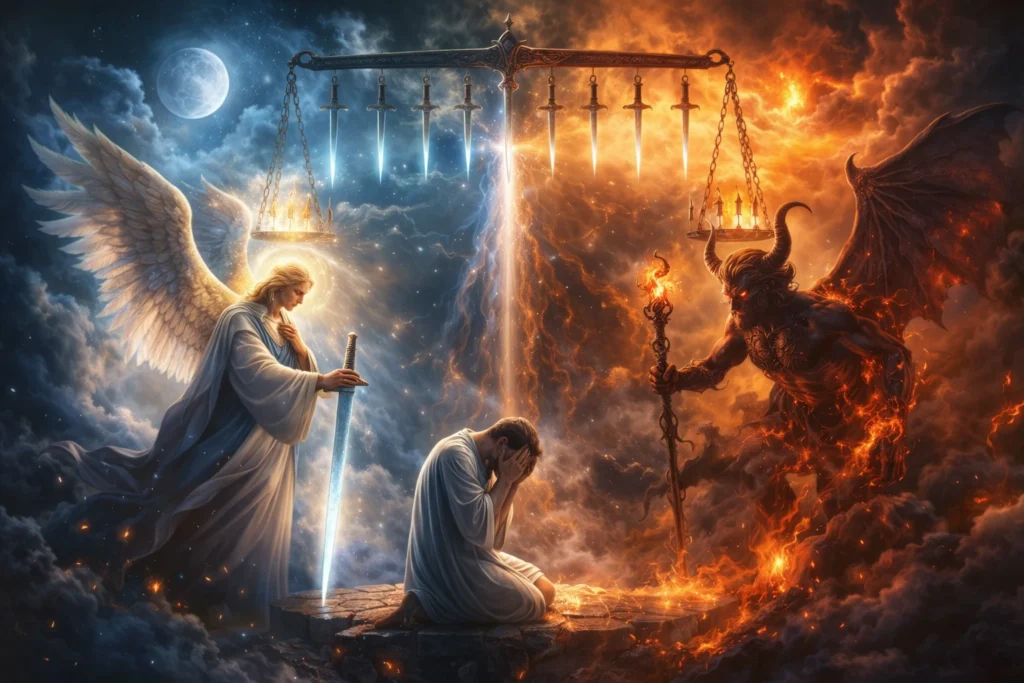
The internal torment of the Nine of Swords as a person inevitably spills over into their external world, profoundly impacting their relationships with others.
In Romantic Relationships: The Anxious Partner
In love, the Nine of Swords as a person can be a challenging yet deeply loving partner. Their anxiety often manifests in ways that can be misinterpreted by others.
•Need for Reassurance: They may constantly seek validation that they are loved and that the relationship is secure. This is not a sign of distrust in their partner but a desperate attempt to quiet their own internal fears.
•Projection of Insecurities: They may project their own fears of inadequacy onto the relationship, creating conflicts out of minor issues. For example, they might interpret a partner’s need for space as a sign of rejection.
•Self-Sabotage: Fearing abandonment, they might unconsciously push their partner away to control the inevitable outcome. This is a tragic self-fulfilling prophecy where their fear of being left alone leads them to create the very situation they dread .
•Deep Empathy (The Hidden Gift): On the positive side, their own experience with suffering can make them incredibly empathetic and compassionate partners. They understand pain and are often the first to offer comfort and support to a loved one in distress.
In Friendships and Social Circles: The Withdrawn Confidant
Socially, the Nine of Swords as a person often appears as a walking contradiction. They may be perceived as distant or aloof, but this is a protective shell built to manage their overwhelming internal state.
•Social Withdrawal: Large social gatherings can be incredibly draining, as their mind is already overstimulated. They often prefer deep, one-on-one conversations to superficial group interactions.
•The Burden of Secrets: They may carry a heavy weight of guilt or shame, making it difficult for them to open up and be vulnerable with friends. They fear that if others knew their deepest anxieties, they would be rejected.
•The Loyal Advisor: When they do form close bonds, they are fiercely loyal. Because they have spent countless hours analyzing every possible negative outcome, they can sometimes offer surprisingly insightful and cautious advice, helping their friends avoid pitfalls they have already mentally rehearsed a thousand times.
In Career and the Workplace: The Perfectionist Under Pressure
In a professional setting, the energy of the Nine of Swords as a person can be both a superpower and a severe handicap.
•Perfectionism: Driven by a fear of failure and criticism, they often produce exceptionally high-quality work. They will check and re-check every detail, anticipating potential problems before they arise.
•Imposter Syndrome: Despite their competence, they live with a persistent feeling of being a fraud, constantly fearing that they will be “found out.” This can prevent them from taking on leadership roles or celebrating their own successes.
•Burnout: The constant mental pressure and high standards they place on themselves make them highly susceptible to burnout. They struggle to disconnect from work, with anxieties about projects often keeping them awake at night.
The Spiritual Dimension: The Dark Night of the Soul
Beyond the psychological, the Nine of Swords as a person embodies a profound spiritual concept: the “Dark Night of the Soul.” This term, coined by the 16th-century mystic St. John of the Cross, describes a period of spiritual crisis, desolation, and emptiness, where one feels utterly abandoned by the divine .
When the Mind Becomes a Prison
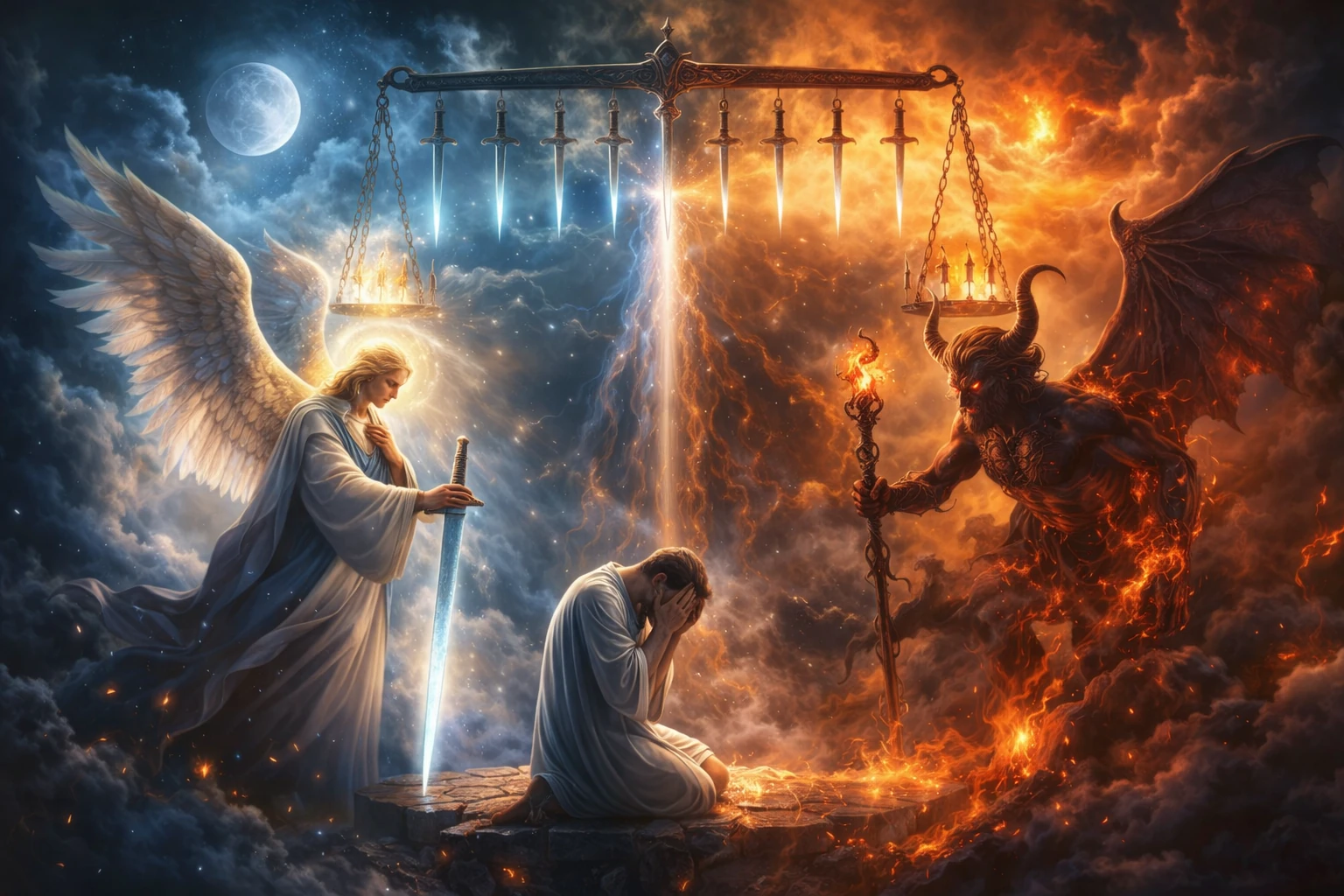
The Nine of Swords represents the stage of this journey where the crisis is primarily mental. It is a spiritual test where the ego and the intellect, which have long been the primary tools for navigating the world, become the very source of suffering.
The nine swords are the ego’s desperate attempts to rationalize, control, and understand a situation that transcends logic.
This is a necessary, albeit excruciating, part of the spiritual path. It is the point where one must confront the limitations of their own mind and surrender to a higher power or a deeper truth.
The suffering is not a punishment but a purification process, designed to break down the ego’s defenses and open the soul to a more profound level of awareness.
The Promise of Dawn: The Hidden Hope in the Nine of Swords
Crucially, the Nine of Swords as a person is not a permanent state of being. The number nine in Tarot signifies completion, the end of a cycle. This card often appears just before a breakthrough. It is the darkest hour just before the dawn .
The spiritual message of the Nine of Swords is that the very intensity of the suffering is a sign that a profound shift is imminent. The pain becomes so unbearable that it forces the individual to seek a new way of being, to look beyond the prison of their own thoughts.
This is the alchemical process of turning lead (mental anguish) into gold (spiritual wisdom). The swords of the mind, once instruments of torture, can be reforged into tools of discernment, clarity, and insight.
Healing and Alchemy: Transmuting the Overthinker’s Energy
For the Nine of Swords as a person, healing is not about eliminating thoughts but about changing their relationship with them. It is a journey of mental alchemy, transforming a toxic inner environment into a source of strength.
Practical Strategies for Mental Liberation
1.Mindfulness and Meditation: The core practice for healing this energy is mindfulness—the gentle, non-judgmental observation of one’s thoughts. Meditation teaches the individual that they are not their thoughts; they are the awareness behind the thoughts. This creates a crucial space between the self and the mental chatter.
2.Cognitive Behavioral Therapy (CBT) Techniques: CBT offers practical tools for identifying and challenging cognitive distortions. By learning to recognize patterns of catastrophizing or black-and-white thinking, the individual can begin to consciously reframe their thoughts in a more balanced and realistic way.
3.Journaling (The Brain Dump): Externalizing thoughts is a powerful way to rob them of their power. A “brain dump” journal, where one writes down every fear and worry without censorship, can clear the mental clutter and provide a more objective perspective.
4.Physical Release: Anxiety is not just mental; it is stored in the body. Physical exercise, yoga, or even simple deep breathing exercises can help release stored tension and regulate the nervous system.
Spiritual Practices for Soulful Healing
1.Surrender and Faith: The spiritual antidote to the Nine of Swords is surrender. This means acknowledging the limits of one’s own control and cultivating faith in a larger cosmic order. This can be faith in God, the Universe, or simply the natural unfolding of life.
2.Connecting with the Body and Nature: The suit of Swords is air—the realm of the mind. To balance this, the Nine of Swords as a person must ground themselves in the element of Earth. Spending time in nature, practicing grounding exercises, or engaging in tactile hobbies can help pull them out of their heads and into the present moment.
3.Compassion and Self-Forgiveness: The inner critic thrives on shame. The healing journey requires a conscious cultivation of self-compassion. This involves treating oneself with the same kindness and understanding one would offer a dear friend who is suffering.
The Wounded Healer
The Nine of Swords as a person is the archetype of the “Wounded Healer.” Their deep familiarity with suffering, anxiety, and the dark corners of the human mind gives them a unique capacity for empathy and wisdom. Once they embark on their own healing journey, they can become incredible sources of comfort and guidance for others who are lost in their own mental prisons.
To be, or to be with, a Nine of Swords as a person is a call to practice profound compassion. It is a reminder that the most terrifying battles are often fought in silence, within the confines of one’s own mind. But it is also a testament to the resilience of the human spirit. The dawn always follows the darkest night, and the swords of the mind, when understood and mastered, can become the very tools that carve a path to liberation, clarity, and a peace that surpasses all understanding.
The Physiological Toll of Chronic Anxiety
The mental anguish of the Nine of Swords as a person is not confined to the mind; it has profound physiological consequences. The constant state of hyper-vigilance and overthinking triggers the body’s ‘fight or flight’ response, leading to a cascade of stress hormones that, over time, can severely impact physical health .
•Sleep Disturbances: As depicted in the card, insomnia is a hallmark. The mind refuses to shut down, replaying scenarios, and anticipating threats, making restful sleep elusive. This lack of restorative sleep exacerbates anxiety, creating a vicious cycle.
•Physical Symptoms: Chronic anxiety can manifest as headaches, digestive issues (e.g., irritable bowel syndrome), muscle tension, fatigue, and a weakened immune system. The body is constantly on high alert, leading to exhaustion and susceptibility to illness.
•Analysis Paralysis: The overwhelming influx of thoughts and potential negative outcomes can lead to ‘analysis paralysis,’ where the individual becomes incapable of making decisions or taking action. This inaction further fuels feelings of helplessness and inadequacy, reinforcing the cycle of anxiety.
The Nine of Swords Person in Relationships and Social Life (Expanded)
Impact on Communication and Trust
The internal world of the Nine of Swords as a person significantly shapes their external interactions, particularly in how they communicate and build trust.
•Indirect Communication: Fearing judgment or rejection, they may resort to indirect communication, hinting at their worries rather than expressing them directly. This can lead to misunderstandings and frustration for both parties.
•Difficulty with Trust: Their inherent pessimism and tendency to anticipate the worst can make it challenging for them to fully trust others, even those closest to them. They may constantly look for hidden motives or signs of betrayal, creating a self-fulfilling prophecy.
•The Need for Reassurance vs. The Burden of Reassurance: While they crave reassurance, their constant need for it can become a burden on partners and friends, who may feel exhausted or inadequate in their attempts to provide comfort. This can lead to a sense of isolation, where the Nine of Swords person feels misunderstood and alone in their suffering.
Supporting the Nine of Swords Person
For those interacting with a Nine of Swords as a person, understanding and patience are paramount. Effective support involves:
•Active Listening without Judgment: Allowing them to express their fears without immediately trying to ‘fix’ them or dismiss their worries as irrational. Validation of their feelings is crucial.
•Gentle Reality Checks: Once they feel heard, gently guiding them back to objective reality. Asking questions like, “What evidence do you have for this fear?” or “What’s the most likely outcome?” can help them challenge their cognitive distortions.
•Encouraging Small Actions: Helping them break down overwhelming tasks into smaller, manageable steps to combat analysis paralysis. Celebrating small victories can rebuild their sense of agency.
•Setting Healthy Boundaries: While supportive, it’s also important for loved ones to set boundaries to protect their own energy. Encouraging professional help is often a necessary step.
The Spiritual Dimension: The Dark Night of the Soul (Expanded)
Ego Dissolution and Spiritual Awakening
The Nine of Swords as a person is often undergoing a profound process of ego dissolution. The relentless mental torment can be seen as the ego’s desperate struggle to maintain control in the face of an impending spiritual awakening. The ‘swords’ are the ego’s defenses, its attempts to intellectualize and control the uncontrollable .
•The Void: This period can feel like a spiritual void, where old beliefs and certainties crumble, leaving the individual feeling lost and disconnected. This emptiness is not a sign of failure but a necessary clearing for new spiritual truths to emerge.
•Surrender to the Unknown: The ultimate spiritual lesson of the Nine of Swords is surrender. It is the realization that true peace comes not from controlling every outcome, but from trusting the flow of life and the wisdom of the universe. This surrender is often born out of sheer exhaustion from fighting the internal battle.
•Catalyst for Transformation: The intense suffering acts as a catalyst, forcing the individual to look beyond superficial solutions and seek deeper meaning. It is a crucible that purifies the soul, preparing it for a more authentic and aligned existence.
The Role of Spiritual Practices in Transmutation
For the Nine of Swords as a person, spiritual practices are not just coping mechanisms but essential tools for transmuting their anxious energy into wisdom and peace.
•Mindful Movement: Practices like Tai Chi, Qigong, or conscious walking can help integrate the mind and body, grounding the restless mental energy into physical presence.
•Connecting with Higher Self/Divine: Prayer, meditation, and contemplation can help establish a connection with a source of wisdom and comfort beyond the ego. This provides a sense of perspective and reduces feelings of isolation.
•Service to Others: Shifting focus from internal suffering to external contribution can be incredibly healing. Engaging in acts of service helps to break the self-absorption of anxiety and fosters a sense of purpose and connection.
•Nature Immersion: Spending time in natural environments has a profound calming effect on the nervous system and can help the Nine of Swords person reconnect with the larger, peaceful rhythms of life, away from the artificial constructs of their anxious mind.
Healing and Alchemy: Transmuting the Overthinker’s Energy
Cultivating Inner Resilience: Beyond Coping Mechanisms
Healing for the Nine of Swords as a person goes beyond merely coping with anxiety; it involves cultivating deep inner resilience that transforms their relationship with fear itself. This is an alchemical process that turns the ‘lead’ of suffering into the ‘gold’ of wisdom and strength.
1.Re-framing Fear as Information: Instead of viewing fear as an enemy, the individual learns to see it as a messenger. What is the fear trying to communicate? Is it a genuine warning, or a relic of past trauma? This shift in perspective disarms the fear’s power.
2.Developing a ‘Mental Hygiene’ Routine: Just as physical hygiene is crucial, mental hygiene is vital. This includes daily practices like:
•Digital Detox: Limiting exposure to overwhelming news or social media.
•Mindful Consumption: Being selective about what information and energies are allowed into one’s mental space.
•Gratitude Practice: Shifting focus to what is working well, counteracting the brain’s negativity bias.
3.Embracing Imperfection: The pursuit of perfection often fuels anxiety. Learning to embrace imperfection, both in oneself and in life, releases the pressure to control the uncontrollable. This aligns with the wisdom of the Wabi-Sabi philosophy, finding beauty in transience and imperfection.
4.Building a Support System: Surrounding oneself with empathetic and understanding individuals who can offer a safe space for vulnerability. This combats the isolation inherent in the Nine of Swords energy.
The Nine of Swords as a Gateway to Wisdom
Ultimately, the journey through the Nine of Swords as a person is a profound initiation. The individual who successfully navigates this dark night emerges not unscathed, but profoundly transformed. They gain a unique depth of understanding, an unparalleled empathy for suffering, and an unshakeable inner peace that comes from having faced their deepest fears and emerged victorious.
•Empathy and Compassion: Their personal experience with mental anguish makes them exceptionally empathetic and compassionate towards others’ struggles. They become natural healers and counselors.
•Discernment and Insight: Having dissected every possible negative scenario, they develop a keen sense of discernment, able to see through illusions and identify genuine threats from imagined ones.
•Inner Peace: The peace they find is not the absence of trouble, but the presence of calm in the midst of chaos. It is a hard-won peace, rooted in self-acceptance and trust in the process of life.
This transformation is the ultimate promise of the Nine of Swords: that even in the deepest despair, the seeds of profound wisdom and liberation are sown. The overthinker, once imprisoned by their mind, can become a master of their thoughts, using their intellect as a tool for enlightenment rather than torment.